A Far-Flung Silk Road connection – the Great Mosque of St. Petersburg Russia

St. Petersburg’s skyline says it all. From the banks of the Volga the views include the golden cathedral towers of the Peter and Paul Fortress and the pointed towering Minerats and bright blue tiles of the mosque dome just to the right of it. Peter the Great wanted his capital to reflect the cultural make up of his vast empire.

The Mosque - St. Petersburg
Central Asian-style St. Petersburg Cathedral Mosque

Russian southern cities which lie on the Caspian Sea were the only real Russian ports  linking the nation to the Silk Road trade.  St. Petersburg is just up the Volga River from the trading post village of Novgorod. Russia supplied furs, honey and slaves to Muslim lands as far as Baghdad.  The original route connecting the Volga River to the Caspian Sea until the 11th century. By the 13th century, another route linking the Black Sea to the Byzantine and Persian Empires replaced the original.  This is the route workers travelled when Peter the Great invited all Russians  to help construct their new capital St. Petersburg.  This included the first large number of Muslims to travel to this part of the country.  They were the Tatars from the Volga Region.

The Russian Empire connects the east to the west making it more Eurasia then Russia and covers almost one sixth of the earth’s surface. This being said – there has always been a rich cultural, linguistic and religious diversity among all of its people.   Peter the Great had genuine interest in the affairs of the muslim community since Russia was beginning to extent it’s empire into Ottoman territory.  Among many things, he personally ordered the first Russian language Qur’an to be published in 1716 to help welcome in Russia’s new subjects.  It wasn’t until much later that a proper mosque was built for those how made St. Petersburg their home.

The Mosque - St. PetersburgSt. Petersburg wasn’t established as Russia capital until the early 18th century but today is home to one of the largest and northern most mosques in Europe. Csar Nicolas I gave the Emir of Bukhara permission to buy land near the tombs of the Romanovs in the Peter and Paul fortress island to build a mosque for muslim worshippers in the city. This location was important to the Emir because he wanted to show respect for the rest of Russia and to symbolize the Muslim citizens loyalty to the Russian Empire. The mosque wasn’t completely supported by all of the city but it was able to collect money from donors from inside and outside of Russia and was completed in 1920 after ten years of construction.

The Mosque - St. Petersburg
The Mosque – St. Petersburg

The mosque has suffered a lot over the centuries. It was shutdown by the Bolsheviks – like most religious institutions – and later used as a storage warehouse during World War II. The mosque’s doors remained locked through 1956 but didn’t get any major renovations until the 1980’s.

The Mosque - St. Petersburg
The Mosque – St. Petersburg

Today, nearly where a half a million residents and many descendants of the Tatars.  The Great Mosque with its tall blue dome is hard to miss even on a foggy day.   Most non-muslim visitors can only view the mosque from the outside gates since it is a working mosque. The exterior was originally designed to resemble Tamerlane’s Gur Emir Mausoleum in Samarkand, Uzbekistan. The inside design is a combination of both the art nouveau popular in the beginning of the 20th century and traditional mosque motifs. I didn’t see but pictures show the interior filled with blue and green tiled ceilings and scripted passages of the Qur’an.  The outside views are amazing and maybe the inside will be open for visitors next time.

Its something worth seeing while in St. Petersburg and not too far away from other wonderful sites like the Peter and Paul’s fortress and the former Bolshevik headquarters – Kshesinsky Palace.  It’s just a short walk across the river or an easy tram ride from most parts of St. Petersburg.

Efim Rezvan, deputy director of the Peter the Great Museum of Anthropology and Ethnography states it best:  “There is no panorama of the center of St. Petersburg that does not show two minarets. And this symbol is not only of St. Petersburg. This reflects the country itself, and the dramatic history of the mosque reflects the dramatic history of the country.”

The Mosque - St. Petersburg copy
The top of the Mosque dome in St. Petersburg Russia
The Mosque - St. Petersburg
Detail of St. Petersburg Mosque dome

The best surprises found in Souks, Bazaars and Medinas across the Middle East and beyond

Much of what was the Persian Empire in the BC days were the bazaars which still remain to be the center of commerce in modern times in cities from Istanbul down to Yazd in southern Iran, and from Marrakesh to Xi’an.

Long dark covered alleyways with packed stalls staffed with smiling merchants waiting to make a deal or just share a cup of tea.  It’s the best place to visit upon arrival.  The protected wall of the bazaar give visitors relief from the outdoors and a glimpse of the cities past.

New visitors should take the time and see what they can find around each corner and inside open doorways of these ancient covered passageways.  Whether it be a mosque tucked away behind a small unassuming doorway or a foul smell that lets you know how close you are to the Tanners Souk in Fez Morocco.  The Tanners here have one of the oldest and worst jobs on earth.  The craftsmen are usually seen waist deep in vats of dye made of acid (aka pigeon droppings), pigments and cow urine used to dye raw leather.  It makes a nice picture if you can do it without passing out.  The traveler is lucky to be able to choose to take pictures or just keep on walking like I did.  Not all surprises are pleasant.

My personal favorite things about the central market of a middle eastern city whether it be called a Souk, Bazaar, or Medina is its hidden surprises and smells.

What the locals eat:

How much chicken costs in Marrekash Morroco
Price comparison of chicken Marrakech in 2008
The Pak Shuka in Yerevan
Local food in the Pak Shuka in Yerevan
Muslim Quarter in Xi'an
Muslim Quarter in X’ian

Local traditional tourist entertainment and souvenirs:

Local entertainers in Chefchaouen Morocco
These guys were very persistant..the shoes say it all
Bling in the Souq al-Hamiddiyyah Damascus
What I should have bought in ’08. Bling in the Souq al-Hamiddiyyah Damascus

Beautiful inner courtyard Mosques and architectural highlights:

IMG_4444 copy
Bou Inania Medersa inside the Tanners Souk
IMG_4761 copy
Rooftops of the Medina in Marrakech

Modern Life in an ancient place:

Walking home from school in Fez Morocco
IMG_6023_1 copy
Afternoon in the Souq al-Hamiddiyyah Damascus
Life inside the Medina in Marrakech

These are the places where travelers can leave the guidebook behind and just get lost.  It’s nice to be able to do that once in a while.

The four Iwans of the Jameh Mosque of Esfahan

Jameh Mosque of Isfahan
South, East and West Iwans in the Jameh or Friday Mosque in Esfahan

At the first encounter, there is a courtyard of the Friday Mosque in Esfahan is composed of four prayer halls or Iwans, the east and west are similar in hight and frame but the west is more colorful. The north and south are much larger and both compete for who is fairest.  Each iwan design reflects the time when it was constructed.  The north and south iwns contain some of the original pre-11th century  mosque.  The other two brick domed chambers were included when the Seljuks began embellishing the mosque.  The rebuilding and enhancements commenced in the 17th century and today the mosque is a standing and lovely visual history of the Iranian Architecture.

IMG_5137
Detailed Tiles of the Jameh Mosque in Esfahan

The Jameh Mosque or Masjed-e Jāmeʿ is one of two great congregational hypostyle mosques in the ancient Persian center of Esfahan.   Esfahan continued to expand and grow as a city of commerce and trade continued to flow into the city from the Silk Road.  The first mosque was thought to have held up to 5,ooo friday afternoon worshipers.   This original mosque was thought to be burnt to the ground leaving only some of the south and north Iwans intact.  Some historians say that the fire was actually not a fire but just people being ordered to take away pieces of the mosque and use it for wood when the Seljuks first captured the city under Tughril Beg.  Other historians argue that the mosque was in perfect condition in 1052 when the Tughril Beg took the city.  Either way, the original didn’t survive and what stands here today is the largest and oldest mosques in Iran.

The Seljuk invaded and made Esfahan its capital with the Friday Mosque at its center.  It’s admiration and prestige in Persia grew as both its royal and common patrons built and embellished the structure during the Seljuk period.  It’s beauty and geometric precision in design make this mosque one of the best examples of Persian architecture .  It’s hypostyle design became a blueprint for future construction of mosques and buildings in Persia and the rest of the Islamic world.

This grand mosque was originally built around the same time as the Jameh Mosque in Na’in. Today, very little remains that reflects the time connection.   They both contain alabaster lighting systems for prayer chambers below ground,  have similarly designed wooden carved minbar and they were both though to be built on grounds that used to be Zoroastrian Fire Temples.

Jameh Mosque of Isfahan copy
The alabaster ceiling windows of the lower prayer room of the Friday Mosque in Esfahan
Jameh Mosque of Isfahan
Wood carved minbar in the 14th Century Room of Sultan Uljaitu of the Jameh/Friday Mosque in Esfahan

Each leader and conqueror left their mark on the this richly diverse structure of beauty.  The mosque was the first to have a four iwans which all face the central courtyard and built at various stages during the Seljuks period. Further modifications and additions to the Iwans and the surrounding interiors reflected the times and ambitions of each patron.  The Mongols, Muzzafarids, Timur’s and Safavids all left their mark on the walls of the Jameh Mosque. It was the Muzaffarid ruler who get credit for most of the more decorative pieces. The central ablutions fountain is a replica of the Kabba in Mecca. It is used for would-be haij pilgrim to practice the rituals performed there.

Jameh Mosque of Isfahan

The east and west brick dome were added on during the Seljuk Period. They were originally unimpressive brick and tile domes but both we decorated with tiled mosaics and geometric patterns by the Safavids These iwan are simple and appears to balance the rest. Behind them lie many prayer halls, finely decorated rooms and corridors connecting them. These are all later additions but the highlights are the north and south iwans which contain some of what remained after the original mosque was destroyed by fire.

Jameh Mosque of Isfahan
South or the Qibla Iwan in the Jameh Mosque in Esfahan

The South Dome or Qibla Iwan

This massive and striking iwan was the first the Seljuks constructed some time in the years 1086-87. It was built by Nizam al-Mulk, the famous vizier of Malik Shah, and it contained the mihrab which is the niche cut out of a wall in the center of the Qibla wall which points to Mecca. It’s dome was the largest at its time and was built by Safavid architect Ebrahim B. Esmail. Inside the dome has been adored with Mongol-era stalactite mouldings and two minerats.

The North Dome

Jameh Mosque of Isfahan copy
The North Dome at the Jameh Mosque in Esfahan

It is known to be “the most brilliant examples of what could may have said to be a Seljuk specialty in Iranian architecture.” The North Dome is more elegant and lighter architecturally to the southern dome across from it. It was constructed a year after it by Nizam al-Mulk’s rival Taj al-Mulk and thought to have a royal function. Inside it is filled with massive cursive Qurʾanic inscriptions beautiful to look at even if you can’t read them.

On this very cold friday I had a visit to a piece of Isfahan.  The Metropolitan Museum in Manhattan has put up it’s collection of Islamic Art which includes pieces of the Great Mosque in Esfahan.  There’s a few pictures of details of the Mihrab on display.

Great Mosque of Isfahan's Mihrab at the MET in NYC
Great Mosque of Isfahan’s Mihrab at the MET in NYC
Great Mosque of Isfahan's Mihrab at the MET in NYC
Great Mosque of Isfahan’s Mihrab at the MET in NYC

Travel Life: An intrepid unintentionally picky eater

Have a weak stomach and can’t leave home without popping a few Tums Tablets?  That’s me but I don’t let it get in the way of my wanderlust

Mezes in Damascus
Mezes in Damascus which were excellent and no regrets

Fresh fruit juices, grilled kebab, ice cream, “healthy” green salad, drinks with ice cubes and the list goes on.  These are just a few things that I can’t eat when I’m far from home.  The eating part of the itinerary unwillingly promoted itself to the priority section of most of my pre-trip planning. A few very uncomfortable food related instances happened early in my adventure travel days had a profound effect on how I travel today.

I have always wanted to see as much of the world.  Still true but minus the visit to the local shaman with an interpreter in tow.

IMG_7504_1
Food Market in Yerevan Armenia

A good amount of travel research time is usually spent figuring out where and what to eat a the next destination.  The location of my hotel/hostel hopefully is very close to a good food establishment whether it be a grocery store or restaurant.  There’s an added bonus if the restaurant is located in the hotel/hostel just for jet lag and precautionary reasons.   When I am starving, have just recovered from another case of food poisoning or just got off a 30 flight I usually  want a restaurant to be literally within crawling distance.

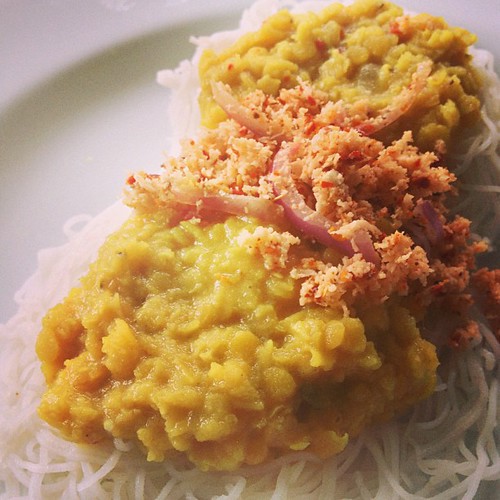
String Hoppers for breakfast
String Hoppers topped with spicy Coconut Simbal for breakfast in Sri Lanka
Pistachio Pastry in Alleppo
Pistachio Pastry in Aleppo – Worth the belly ache I got later

The back story and the naive beginnings of a hungry traveler

I decided early on that I’m not an adventurous eater –  wimpy eater is more like it.  I got burned trying to be like Anthony Bourdain.  I was on a three-week trip and going to meet a friend of my then boyfriend who was in the Peace Corps in Bulgaria.  This was a great trip in between all of my food mishaps that is.   It didn’t ruin my whole trip but I just have memories and wasn’t up to taking pictures.   The theory that everything bad happens in threes was proven.

Airplane food

First, minor but not so fun bout of sickness was a flight from Istanbul to Bucharest.  I was having a pleasant chat with a Turkish guy sitting next to me.  Lunch came and went and I was too busy talking that I just automatically ate what was in front of me.  Maybe I shouldn’t have eaten that chicken salad sandwich on that Air Tarom flight.  The gentleman proceeded to eat my travel companions sandwich he smartly declined.   Lets say I missed a day of sightseeing in Bucharest.

Lesson:  Bring my own food and don’t eat any meat/egg dish that has salad attached to the name on the menu.

Japanese Matsuri food outside of Tokyo
Not so tempting Japanese Matsuri food outside Tokyo

Doing too much to fast leads to bad things

Second, was the trip to the local doctor in Sofia.  I had just met Kathy for the first time and she was wonderful.  I realized that all the travelling from Bucharest to Sofia had taken its toll on me.  I was feeling well and we had a long trek ahead.  It was time to see a doctor again.  In short,  the doctor only spoke Bulgarian and at least Kathy was there to help.   I was glad to get to a doctor  after a very awkward back and fourth translation of my symptoms.  He gave me some mysterious pills,  I took them regardless and we were on our way. Luckily,  they  did the job.  I was a little terrified to eat for a day and a dropped a few pounds.  The beer I drank later made up for the lost calories.    The locals here think that  Rakia sipped while eating shopska salad (both very dubious)  cures everything.  I think they might be on to something or just like a reason to drink Rakia.

Lesson:  Bring Cipro and think about eating just bread and bottled water after a long rail/plane trip.  They are both available just about anywhere.

Fish sandwich cafes along the Bosphorus in Istanbul
Looks innocent right? Well they are still there a couple of years after my incident selling sandwiches

More food problems at the end of a rocky journey

And the third.  The 2.5 weeks were filled with seeing wonderful sites and meeting new friends (doctors too) along the way.  It was the last leg and the worst was behind me.  A friend had mentioned that one thing you can’t miss in Istanbul is the fish sandwich sold on small boats just off of the Bosphorus.  We found the boats like he said and grabbed a couple of dubious grilled fish sandwiches served in a very crusty bun. The fish just fileted, grilled and put inside a white bun with sprig of lettuce and slice of tomato.  No sauce.  I should have stopped after a couple of uncertain bites. The next day, I ended up waking up with a face that was so swollen that I could barely see in front of me.  It was a pretty frightening sight.
The only real adventure was a trip to the local ER in Istanbul early that morning.  The American Hospital of Istanbul is a comfortable facility and I highly recommend it to others in need of care – whether it be of itchy hives or other travel illnesses.  One dose of Cortisone IV – $5M Turkish Lira  – Relief from hives on my face for 24 hours – Priceless.

Lesson:  Make sure to know where and if there’s an ER near by just in case.  Resist those local dishes especially made with fish.  Additionally,  try to eat fruit with skin or  properly clean fruit without it when traveling.  There are many microbes that hideout on the surface of food and in liquids.  They are are usually harmless to locals but could be deadly to those without built up immunities.

What can a traveler do besides just drinking tea and eating bread the whole trip?

IMG_6194_1
There’s always plenty of chai where ever you go

We all have our weak moments when that chocolate covered banana at the street fair in Tokyo looks too good to resist and we want to try to eat like a local to save money.

Japanese Matsuri Food outside of Tokyo
Yummy Japanese Matsuri food outside of Tokyo

In the end, all that travelers can do is take preventative measures, use some common sense and have a good time. Here’s a few things I think about and do these days when I travel that seem to help me:

–  Be organized and plan the  exact route on how to get from customs to your bed

–  Get all required vaccinations and don’t be cheap on things like Malorone Pills

–  Bring your own food.  Remember you can even get food poisoning on the plane.

–  Take it easy when you first arrive and set out a reasonable plan of attack

–  Ease into the local food

–  Stay hydrated and try and skip that glass or 3 of wine on the plane (these days it’s hard to resist after the hassles travelers have to go through to get on a plane etc.)

Stay well and have happy and safe travels in 2012!

Esfahan Market Delight

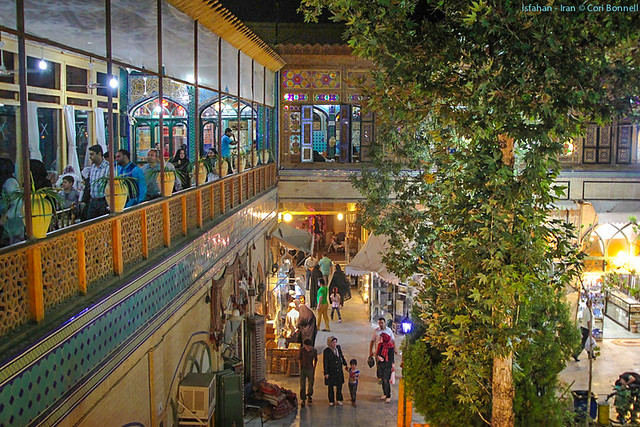
The Grand Bazaar of Isfahan

Esfahan is not only one of the top travel destinations of Iran but also the place to get something to take home.  The US has many restrictions on how much it’s citizens can spend in Iran. This restriction along with the obstacle of having enough cash to float you the whole visit restricts spending and raises the question “What do I buy and where”?  It’s a conundrum but I’m going to make it easy.

Isfahan Traditional Restaurant - Naqsh-e Jahan Square
Naqsh-e Jahan Square Shopping area and the Isfahan Traditional Restaurant

First, Esfahan is located on the central tourist route which goes from Shiraz in the south to Tehran in the north.  It’s not to say that other cities and towns along the way won’t have unique items available to buy such as carpets in Kashan or Qom or enamel wares found in Shiraz shops. Esfahan is home to masters of  miniature painting found on camel bone and has some nice carpet shops.

Miniatures on Camel Bone or parchment:

Chehel Sotoon Palace
Chehel Sotoon Palace where Reza Abbasi is on display

Esfahan was one of the many cities in the vast Persian Empire who developed a Persian standard to the style and composition of miniature paintings.  The city has been a center for Persian traditional crafts for centuries.  The paintings were indirectly  by Chinese and Indian art but have their own unique characteristics including bright colors, idealistic settings and later, scenes of ordinary life.  Works beauty and detail continued to blossom throughout the Safavid period.  Shah Abbas the Great wanted to see Persian artists take the miniature art to the next level and give the craft a distinct Persian look to it.

The miniature reminds me of whales tooth scrimshaw that was done by sailors while they waited for Moby Dick to come along.   In ancient Persia, small finely detailed paintings depicting Polo matches, bird hunting and a romantic meetings were created on the surface of camel bone and parchment.  Miniature style progressed and the pictures began to intentionally go beyond the rectangle borders and included poems. Artists were commissioned by royalty and many began studying the craft as demand increased throughout the Ṣafavid Period.  Most of the pieces seen in galleries and museums around the world today are ones done by or similar to the style of Reza Abbasi who worked in the Late Safavid period under Shah Abbas I.  Some are currently on display in The Metropolitan Museum – New York.

There’s plenty of miniatures on display and for visitors to buy and take home.  Like most of Iran, there’s little pressure to buy, so take time and check out the many studios located in the bazaar corridors of the square.  It doesn’t cost anything to look and many shopkeepers are keen on educating their customers on what they have to sell. Esfahan is the best place to even just look.

Carpets

Carpet Museum of Iran

Iran is most famous for its carpets which are filled with geometric shapes, flowers, tendrils and shapes that almost look like animals.  The carpets are on display in hundreds of shops around Esfahan.  The only thing potential buyers need is time, patience and some kind of idea what they are looking for.  Some say it’s not the buyer choosing the carpet but the carpet chooses you.  This is if you have the funds of course.  If not,  there’s always the token small patch of carpet that are used for seat covers that will set you back a quarter million Rial, or 25K tomans or $25 USD.  I know it’s confusing but if you go better get your currencies straight because some prices are based on Rial and some on the old Toman.


Destination Esfahan

It has been given the historical title of being “half of world”  for a reason.  To see it was to see half the world.  To miss Esfahan would be missing a big part of modern Iran.

Naqsh-e Jahan Square
Sunset in Naqsh-e Jahan Square

It was named the capital of Persian twice under two different ruling powers and is a place that has both vastly prospered and suffered at the hand of Arab and Mongol conquers through the centuries.  It divided by the great Zayanderood River and historically was a central stop along the ancient Silk road. Its trade status ended when the shipping giants like those found in the Netherlands took over with their faster transport and water routes.

This city dates back to the hunter gatherer Paleolithic Era still remains Iran’s cultural and agricultural center. It’s been sacked a number of times and rebuilt.  Most of what is seen today was built during the Safavid times. Shah Abbas I united Persia and made Esfahan its capital once again during this period and built an elegant city that was all the envy of the east as well as the west.

Sheikh Lotfollah Mosque
Morning at Sheikh Lotfollah Mosque

Many of its neighborhoods found here in a way shows how diverse this city was due to its importance in trade along the Silk Road. There is a large Armenian Quarter called New Julfa in Esfahan. Here there are many churches still open for Christian worshipers including the large Vank cathedral. Many remain but the numbers are dwindling and many are leaving for cities outside of Iran including Marseilles and Los Angeles.

Vank Cathedral
Courtyard the Vank Cathedral in the Julfa Armenian Quarter
Shah Mosque
Imam Mosque in Naghsh-i Jahan Square

Esfahan is amazing at night so hang out as much and as long as you can during your visit;  No going to bed early:

Late day arrivals still have plenty to see after the sunsets.  Esfahan lights up like a stage at night. The bridges of the Zayanderood River offer coffee houses, evening picnic areas and entertainment.  It is common to hear local men singing beneath the arches of the Khaju bridge.  The Iman square, once a polo field, is now a place where kids on bikes raise alongside the horse-drawn carriages. The posts found on either side of the square were once goal markers. Photographers get some of their best chances to capture Esfahan under the stars and in all of its illuminating splendor well into the evening.

Khaju Bridge
Beautiful evening at the Khaju Bridge
Sheikh Lotfollah Mosque
Sheikh Lotfollah Mosque in Naghsh-i Jahan Square
Naqsh-e Jahan Square
Naqsh-e Jahan Square late at night

Esfahan is a city that is full of things to see and one which needs at least three full days to a few months if you really want to experience it.  Getting a visa for such a long stay is another question.  With that said,  three full days is perfect.  I would almost say stay less in Tehran and spend more time here since it’s a better walking city and much less polluted. Keep a fair amount of your shopping budget available for here. There’s a great deal of things to choose from. There’s plenty of postcards and are it’s the place to splurge on a carpet or miniature painting. By the way, stamps to the US and elsewhere are expensive, so when the shop keeper is saying you need to put over $1 USD on a postcard believe him/her – it’s expensive. Big surprise, right?

A Walk Around the Jameh Mosque of Na’in

A visit to the oldest inhabited city – Yazd, and now we go and visit the to the oldest mosque in Iran – the Jameh (Friday) Mosque of nearby Nain

Na'in's Jame Mosque

The city is not only famous for its fine silk carpets but for its Jameh Mosque.  The outside is very simple and not as colorful as many I have seen so far.   It’s design is known as the Khorasani style and was  originally constructed in the 8th century AD. It’s basement is thought to have once been a fire temple so it was first used by members of the Zoroastrian faith.  The mosque is without a three-sided Iwan and does not have the typical tiled dome or grand entrance to other mosques in the area.

Na'in's Jame Mosque

This afternoon we had the place to ourselves.  The alabaster stones found in the ceiling helps illuminate the area during the day when worshippers gather to pray during the hot summer and cold winter days.  The details of the columns and the carvings on the wooden Minbar are a wonder to see in person.

Na'in's Jame Mosque
Na’in’s Jame Mosque Minbar and prayer area

Like many mosques, the Jameh Mosque transformed to what it is today over the centuries with each conqueror making their additions to the structure.  The elaborate brick work seen on the columns and much of the interior  inside were characteristic of the Seljuk period which was around the 11th century. The unusual octagon shaped minaret and wooden minbar was also added to 700 years ago.

Na’in is a natural compliment to seeing the Jameh Mosque found in Esfahan. I recommend seeing it first if you can. It’s makes a good rest stop on the trip between Esfahan and Yazd.

Na'in's Jame Mosque
Mihrab and the wooden Minbar at the Jameh Mosque in Na’in
Na'in's Jame Mosque
Mihrab in the Jameh Mosque
Na'in's Jame Mosque
Grave marker (left) inside of Jameh Mosque in Na’in

The controversial graffiti I referred to at the beginning:

Na'in's Jame Mosque
Grand Ayatollah Ali Khamenei and the Grand Ayatollah Ruhollah Khomeini
Grafetti inside the Na'in's Jame Mosque
Grafitti inside the Na’in’s Jame Mosque
Old section of Na'in
Old alleyway of Na’in

A typical day for visitors on a guided tour of Iran

What does a typical day on a guided tour in Iran look like?

Curious on what actually goes down when you are an American on a mandatory guided tour in Iran?  It’s not as bad as it sounds and there’s no choice in the matter since we are Americans. My husband and  I, like many travelers,  usually prefer to go at my own speed when we take a trip.   We get typically get by with help from good pre-trip research, a guidebook with a good map, on site pointers from other travelers we meet along the way and the occasional internet search at the local internet cafe/hostel.

Many who are considering a trip to Iran wonder simply what a day is like when you need to be escorted around by a local guide.  I found plenty of videos; pictures; blog posts about traveling in Iran but little information about how a typical day went down.   I understand it may not be very exciting material but I hope it gives others a little more insight on how things roll along during a typical day.  I travel independently so tours aren’t usually a part of my travels except for the occasional organized day trip to a protected area which requires a guide.

My typical day:

7am: Get up  and wait for our guide to do the same.  The first few days the time was more like 3am but it worked its way eventually to 7am. I like early starts even if it means chilling out for a couple of hours waiting for our fixer.

9am:  Meet our sleepy-eyed guide for breakfast which hopefully includes eggs, fresh bread, cheese, butter, jam (hopefully not of the carrot variety) and of course cups and cups of tea.  I’m excited when things like hot soup, real coffee and pastries are there as well.  This happened a couple of times.

Shiraz Niayesh Traditional Hotel
Dining area of the Niayesh Hotel in Shiraz early morning…it’s 7am..where is everyone?

10am ish:  Or somewhere around that time…Check out the sites until it gets really hot which usually coincides with lunch hour at high noon.

12pm – 1pm:  Many things that require an entrance fee close at this time anyways.  It’s a good time to have lunch when everyone else does.  Lunch usually is the biggest meal of the day and the choices are very much like dinner.   The vegetarian menu typically has been limited to rice, bread, yogurt/Doogh and the usual plate of  Kookoo Zabzi –  sometimes the cook has other choices but usually it means meat dishes where the meat is literally picked out of the plate.  I decided I had enough Kookoo Zabzi and alternated with kebab.

12pm-late afternoon: Our guide goes to the gym and lets us have some time to ourselves.  This is when I have a few minutes out of the sun and let my hijab down.  It was hot that day but no complaints.  The hijab kept my head safe from the suns rays.

Persepolis
Mid day in Persepolis

3-4pm:  We take off again to see sites in the best light and before evening prayer time.

Shah Cheragh Mosque
Evening prayer time at the Shah Cheragh Mosque in Shiraz

Around Sundown:  We have dinner and check out what goes on after the sun sets.  This is when I hope to find something sweet like Saffron Ice cream and get some good night shots.  The evenings are when most cities typically come alive.

Our view of the Sweeping Mosque or Bibi Dokhtaran Mausoleum near by
Our view of the Sweeping Mosque or Bibi Dokhtaran Mausoleum near by in Shiraz
Shiraz Market near the Nasir al-Mulk Mosque
No pistachio Ice cream but plenty of other sweets to choose from in Shiraz

Best of Yazd: From getting lost in the quiet alleyways to enjoying the view from the rooftops

Yazd is oldest city in the world and to get to know it a visitor needs to see it from all angles

Alleyway in Yazd

The adobe alleyways in the old city  keep the dwellings protected from the sun, large vehicles out and water fresh and cool below.   My visit started on a thursday after noon and ended a couple of days afterwards.  It is considered the weekend here and it was quiet for the most part.   The  doorway found along the alleyways are modest entrances to the beautiful homes which lie behind. They traditionally  contain a courtyard filled with plants and a pool of water and have rooms circulating around it.

Doorway in Yazd
Doorway in Old Yazd

Plenty was open and available to see since the weekends are times when families spend time together and also visit tourist sites. We arrived in the late afternoon on thursday. We got to see a couple of sites before getting a bite to eat at the Silk Road Hotel. The food was pretty good there. The standard menu of kebab, Kookoo Zabzi, Rice, salad and Doogh. Fridays get pretty quiet here. Most activity ceases until after the evening prayer. At least we can find a place to get a cold drink as we explore the empty bazaar.

Bazaar on a Friday in Yazd

We left Sunday and found out that this was a good choice since most shops are closed in this conservative town. This includes the famous Haj Khalife Ali Rahbar Confectionary Shop near the Amir Chakhmaq square. I luckily got to it on Saturday and bought my 1/2 kilo of Qottab – it’s sort of like Mexican Wedding cookies with cardamom.

Pastries at Haj Khalifeh Rahbar's shop
Pastries at Haj Khalifeh Rahbar’s shop

Our days were filled with visiting mosques in town; visiting Zoroastrian landmarks; taking day trips to the UNESCO sites of Chak-Chak and Kharanaq; and eating and sleeping in between. Yazd is definitely on the list of places to come back to when revisiting again in the future.

Masjed-i Jamé mosque
Sunrise in front of the Masjed-i Jamé mosque
Masjed-i Jamé mosque
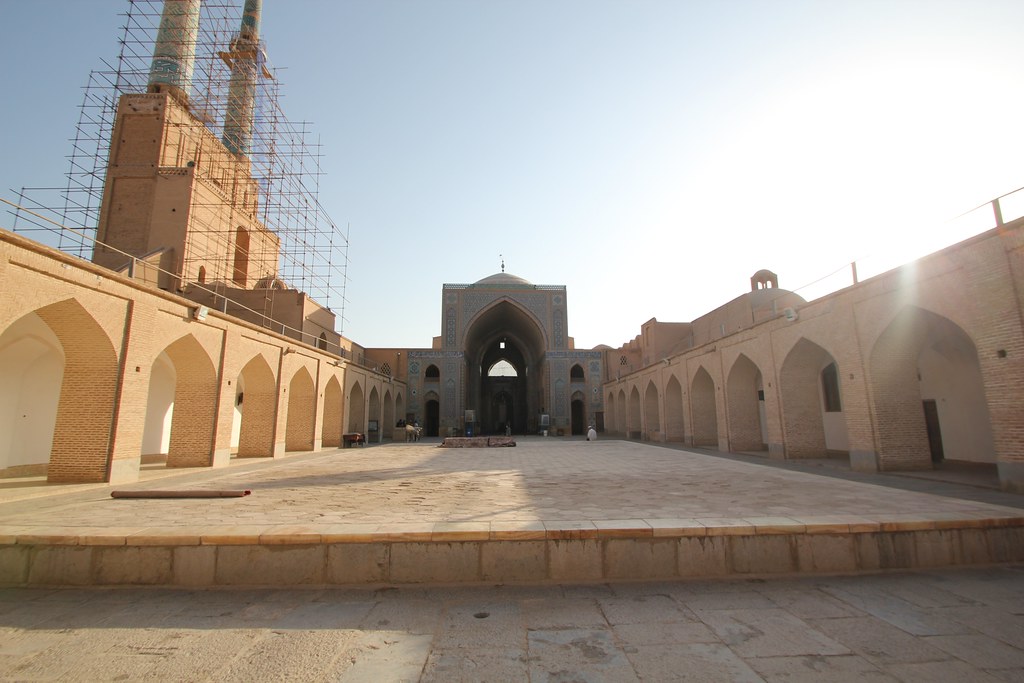
Courtyard of the Masjed-i Jamé mosque
Masjed-i Jamé mosque
Inside the Masjed-i Jamé mosque
Masjed-i Jamé mosque
Iwan of the Masjed-i Jamé mosque
View of Jameh Mosque from Orient Hotel
View of Jameh Mosque from Orient Hotel in Yazd