Old Cairo: Coptic Hanging Churches and the Oldest Mosque in Africa

Old Cairo is where most major religions of the country and continent meet.  The AmrIbn el-Aas Mosque and the Hanging Church reside in this part of town and have been neighbors for almost for almost 1400 years.  They are both amazing structures to view and can’t be missed on a trip to Cairo.

This slideshow requires JavaScript.

Continue reading “Old Cairo: Coptic Hanging Churches and the Oldest Mosque in Africa”

Not so Dead Cities of Syria

Imagine having a UNESCO Heritage site all to yourself? This is what I found late in the day when I got a ride out to see Al Basa and Sejilla from Hama, Syria. The two sites aren’t officially recognized by UNESCO but are both protected by the Syrian Antiquity law and listed under the category of archaeological sites and registered by the Syrian Minister of Culture.   It’s getting late in the day 4:30 and the overseer at Serjilla is waiting in his car as this lone visitor shows up. The place closes at 5pm and I’m given the look which tells me to pretty much get a move on with a smile. So there’s about 10 acres of area (lots to cover and “enjoy”) and time is ticking. I’m sure some backish (tip or bribe) will extend my welcome but it’s something I don’t like to do.

The one thing great thing to my timing is that I’m able to see the area by myself and the quality late afternoon light will hopefully give me great shots. I’ll need these later since it will allow me to examine what I only had time to take a picture of.

This slideshow requires JavaScript.

Beginning in the 4th Century, this area once housed a wealthy group of Christians settlers. Things like the bath houses and fertile land, and it’s closeness to trade centers like Apamea and Antioch all together can only conclude that this was a village of well to do citizens. The soil is so fertile that it presently is the site of  many working fruit orchards and oil groves.

The houses, baths, temples, sarcophagi (tombs) and churches they are housed in can still be identified and it doesn’t take much of an imagination to picture what this village used to look like when it was occupied many centuries ago. The town was at a crossroads between the trade destinations of Antioch and Apamea and continued to be inhabited by the same Christians despite being conquered by the Crusaders in 1098 and later the Arabs in 1123. An earthquake is what caused this village to be abandoned in the late 12th century. Many archways, walls, and whole rooms are still fully intact which is amazing. It’s not too hard to envision what the village must have looked like centuries ago.

It’s a wonder why it’s not recognized by UNESCO. This is a big reason to check out and support sites that are not on the list. It’s very important to treat them with care and respect they deserve and allow them to be open to others in the future.  This should go unsaid but please don’t climb up or take away things that need to stay there. Pictures should be the only souvenir you take back with you as tempting as it may be to stick one little piece of rock in your pocket.

Hama and it’s great Beehives

We were at a crossroads in Syria and needed to figure out whether the next stop should be the ancient city of Hama aka Hamah (Epiphania) or Homs aka Hims, Syria?    We then turned to the help of the internet.  We checked out some somewhat reliable travel forums, did some quick Google searches, read a little  and decided that Hama was a good jumping point to see several sites including: Krak des ChevaliersApameaQasr ibn Wardanthe Dead Cities or Serjilla and of course the Norias in town. Besides, its mid-June and it’s getting into the upper 80’s F.   This is probably why we have found very few travelers and have the sites pretty much to ourselves.   This is a good and bad thing.  We still have to make our way up through eastern Turkey but we will be trekking up to see  Mount Nemrut (2150m altitude) and it’s still chilly before the sun rises so no real hurry. We’re ok staying here for a few days.

This slideshow requires JavaScript.


Continue reading “Hama and it’s great Beehives”

The Bearded Rockskipper and why we travel

The Bearded Rockskipper is what those odd fish/lizard/snake creatures are called.  I had been combing the internet just to satisfy my curiosity.  I can get a bit obsessed when it comes to figuring out why?, what? or how come? while traveling.  I guess it’s why I travel because I will hopefully always be curious.

My walk along the shore in Grand Baie Mauritius turned into a marine biology expedition for this travel geek.  Just what was that shiny, dark green creature hopping to and fro amongst its neighbors the sea urchin and fiddler crab.  Of course, when I got back to my hotel and asked the innkeeper about it, it all got lost in translation (gave me a quizzical look) and he gave up and moved on to more imperative things.  I can’t blame him since this was probably a discovery for him when he was 2 years old and something really not interesting him.

Experiences like this one and many others on the road exemplify the true meaning of traveling and how it makes an outsider look at an unfamiliar world with fresh eyes.  Trying to rap my head around why locals live their lives the way they do, what the local version of the squirrel or minnow in this case is, what are the social norms and what’s considered acceptable behavior (don’t really like pissing any one-off), and understanding there are things that can’t be simply explained .  This is what travel is to me.  Always asking why or what is that?

This slideshow requires JavaScript.


Continue reading “The Bearded Rockskipper and why we travel”

Palawan: it’s bumpy roads, beautiful beaches and bugs…

Winterstorm in Central Park

Just waiting for the next SNOWPOCALYPSE!  Something that the locals and visitors in El Nido on Palawan are probably not ever worried about but not to say they don’t have the wet and windy equivalent.  The snow is about as inevidable as a typhoon in that region but right now it is sunny and above 70 degrees.  I’m used to snow like a villager in South East Asia is used to rain.  I spent my youth surrounded by snow in Columbus Ohio and blizzards in New England.  I have to admit…the snow is nice for about 10 minutes here in NYC but after a few dogs wander through the fresh white stuff, the garbage reappears and it’s again just a big grey winter mess.

Now, back to El Nido.  Getting there and just about anywhere in the Philippines “involves amusing travel and transportation modes. Taking these various local transportation forms is a traveling thrill in itself” says a local tour company’s website.   At least there are many rewards to putting your life in peril and among them are getting off the beaten backpack trail and having an amazing time once the overland Jeepney, by sea ferry ride  and/or air journey by Turbo Prop is over.

This slideshow requires JavaScript.


Continue reading “Palawan: it’s bumpy roads, beautiful beaches and bugs…”

Jetlag Express from Shanghai to Casablanca VIA Tripoli

36 hours from China to Morocco. I’m on a train from the airport to Casablanca and it’s only been  an hour but feels like it took 20 hours.  We are arriving to Morocco after a 36 hour-long Qatar flight 550 from Shanghai where we each racked up almost 8000 miles of distance along with a dose of mind-boggling jet

Air Terminal @ Tripoli

lag.  I’m Traveltired to say the least.  The flight itself felt like we were tagging along a Chinese missionaries sponsored by the People’s Republic peace corp (if there is such a group is doubtful) because we were just about the only passengers not equipped with a yellow safety helmet and military issued backpack.  The flight dropped all of those workmen losing their flying virginity in lovely Tripoli.  Unfortunately we weren’t able to get off to check out the airport but the graveyard they call their runway was enough of a visual souvenir.  The plane is now 90% empty. This was a Boeing 777 which can seat up to 550 people. The flight attendant still refused to give us an upgrade to first class.  Too tired to care.


Libya Air Fleet or spare parts?

The 3 hour trip to Casablanca from Tripoli got us landed in the middle of the afternoon Western Europe Time .  There was just enough day light to get to the hotel, find something edible nearby and to find ways to keep our eyes open since it would be a bad long-term move if we turned in before 8pm. It was our only time to see Casablanca. We just wanted to see a little bit of the city while overcoming the harshest jet lag I had ever experienced.  The hours from the airport to the pillow was surprisingly hassle-free, my head didn’t burst and the little pill had no problem helping me get to sleep later.  A good night’s sleep was imperative tonight since this adventure wasn’t close to being over. We had booked a morning Marrakesh Express.  Don’t worry I’m not going to reference the song as tempting as it may be.


The train, like in most places, is the best way to go from Casablanca to Marrakesh May Day weekend 2008.  Taking a plane was just ridiculous since it’s expensive, we didn’t need to get anywhere fast and besides, we would miss the opportunity to witness inside and outside scenery of the humid train.

One of the pitfalls of planning a RTW trip is the things which can’t be avoided.  We had traveling in this part of the world before the severe heat, Ramadan and here we had May Day.  Being in Morocco during that particular weekend isn’t ideal since it’s Europe’s equivalent to the US Memorial Day long weekend holiday.    Like us, they usually hit the road and descend in the thousands near by attractions like Marrakesh.  The euro was strong and still is years later. For many, its great place to spend a few Euro on rugs and other bric-a-brac found in cute shops inside the Media and on a spa treatment back at the luxurious Riad.  The USD just wasn’t allowing us to go crazy and proposed a challenge to our planned budget.  We were just about half way through our year-long sojourn and had already had some unplanned budget overrides.  We just had to just roll with the Euro backed punches like we had done from the start.

This slideshow requires JavaScript.

Why waste more time and money on worrying about forces that were out of our reach.  We were determined to enjoy Europe Morocco since we had just spent 2 days getting there . Our fiscal pains temporarily were forgotten in the steam of our Tagine and help of a few bottles of local beer. The common theme on such a trip is to manage with what we had and we did.  We found beautiful yet reasonably priced Riad called Riad al Faras for $85 USD, and enjoyed a few days of walking around the Medina, enjoying the company of those also staying at the Riad.  At the end, it only took a medium size chunk out of the budget but it was one of minor indulgences we treated to ourselves that year away.

The Great RTW Trip: Where to end it!

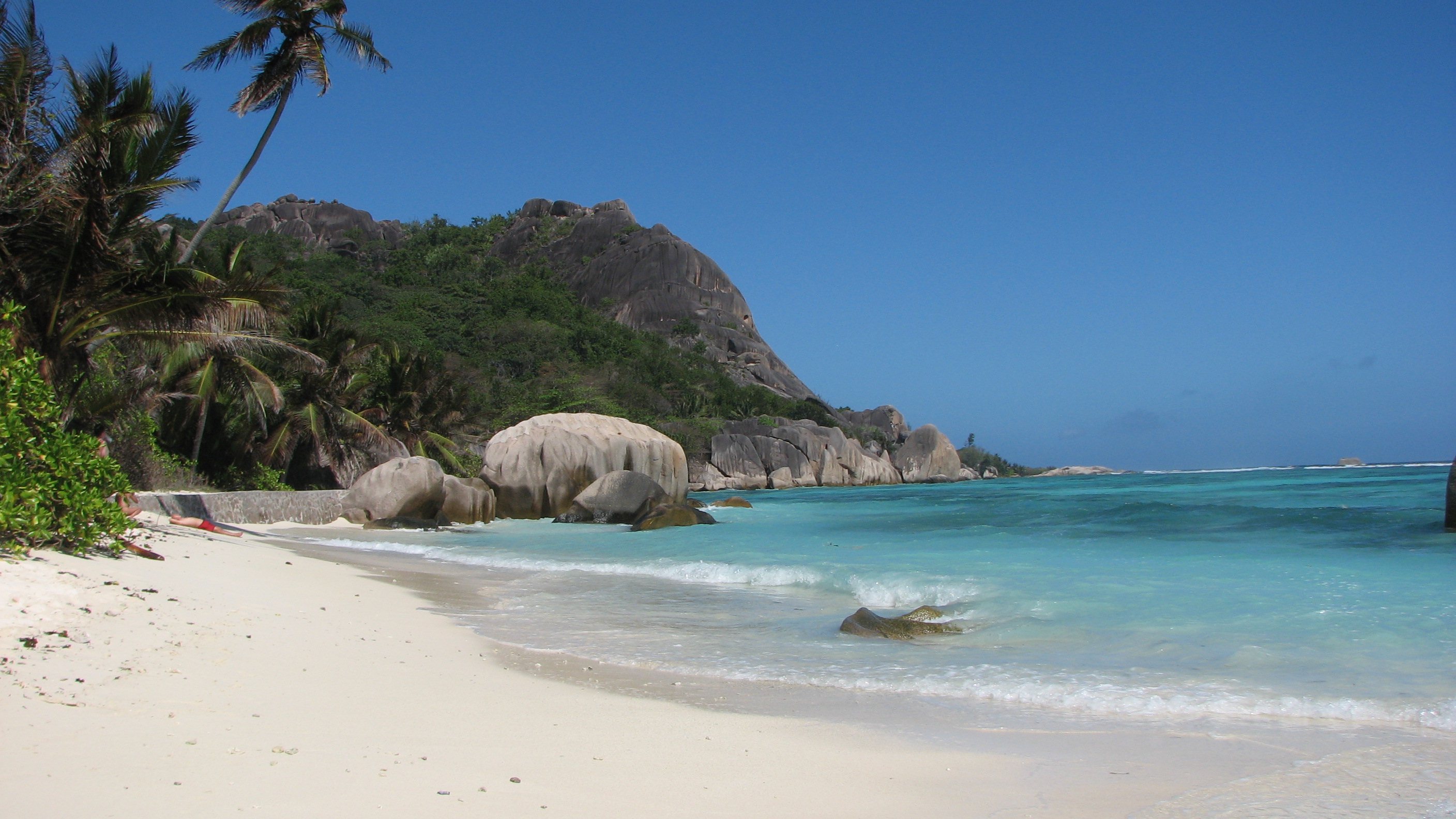
Beach in the Seychelles – La Digue

Planning a RTW trip for a year is something that one can never spend enough time doing.  No matter how long you plan and how much research is done, there’s always unplanned incidents which that can throw a huge wrench into any well thought out itinerary.  My only advise is to have two things.  A really good optimistic sense of humor and strong will to forge ahead after something didn’t go as plan because it will happen.  Unplanned events and Force-majeure, aka acts outside of human control, may include those pesky local holidays that your trusty LP guide never seems to give the heads up about, forces of nature or just the weather,  locals or people dressed in military gear (official, unofficial or somewhere in-between) taking over the government, protests which turn bloody mad, and a let dramatic and continuing  tanking of the USD greenback.  Let’s just say things got expensive real fast and we won’t even talk about the rise in food prices.  Well, may I just say a few words because it’s happening again.  The NYTimes featured an article about the U.N. addressing the rise of food costs.  This is a big heads up to people traveling overseas.  Developing nations will be hit the hardest.  The Philippines seem to be fine for now since corruption took care of that according to Bloomberg.com.

One of the things that can be planned which will hopefully offset some of the unfortunate incidents along the way is where the end of the line will be. How can you make a nice ending to a long journey? This is where the Seychelles comes in.  It’s an expensive destination compared to most but it’s a once in a lifetime experience given it’s locale and limited access.  Flying from JFK in NYC to Mahe International in a single trip cost about $2000/person and the shortest trip is 20 hours.  Flights also don’t go everyday.  The added advantage of going here on a RTW trip is that you can include it on one of the many RTW package deals if you are a savvy traveler.  I would also consider transiting through Madagascar and as well as Mauritius while you are in the neighborhood.  It’s much less expensive now, both amazing islands full of good food and natural wonders,  and very safe despite what the media reports, but I do recommend checking out the U.S. and the U.K.‘s excellent travel advisory reports before booking.  in Madagascar and do yourself a favor and look into a private car to take you around when you get there since public transport, as adventurous as it seems, just takes time away from buying vanilla beans ( to freshen up the backpack) and spending time checking out the lemurs and baobab ave.

This slideshow requires JavaScript.

The one thing shortcoming about the Seychelles is the currency situation.  There are plenty of illegal money changers in the center of Mahe but the Seychellois Rupee can only be used by locals.  The Seychellois rupee which is right now .083 to the USD but it doesn’t matter because everything from postcards to the crappy vegetarian pizza is priced in euro.  The Seychelles are amazing and worth every Euro just need to use them wisely.  The bus is 5 rupees to get anywhere like the big supermarket in town which has a good assortment of goods available for reasonable prices.  The bus will also take you to the airport so you don’t have to pay NYC prices for a cab.

The Seychelles is a place where everything is just right.  It’s relaxed, people are genuinely friendly and enjoy life.  We also didn’t know when we would be in this neck of the world again so why not blow the rest of our budget.  The family run hotel called Daniella’s Bungalow’s we stayed in was a bargain (100 Euro/night including breakfast) It’s located down the street from most of the nicest properties on Mahe like  the oceanfront Le Meridian which was going for $300+ Euro.  It wasn’t oceanfront but it was good enough for Keanu who jogged past my husband and I as we lugged out backpacks from the bus stop to Daniella’s after a bumpy flight from Mauritius.  Daniella’s didn’t have an oceanfront location but it was a 2 minute walk from a deserted beautiful local stretch of beach.

Where ever the RTW world trail ends make sure it ends on the best note possibly because it will be the last taste you will have of absolute freedom.  Being somewhere like the Seychelles makes all of those missed destinations, unfortunate encounters with dubious others, injuries and other unpleasant events disappear with the ocean tides of the sapphire blue lagoon.  For the last days of the sojourn it will be only you and the guy that runs the unofficial shuttle boat Keanu probably used going back and forth from the Le Meridian.

Hoi An..better part of the Banana Pancake Trail

It’s no wonder Hoi An is on most travelers itineraries while visiting Vietnam and South East Asia. It’s a UNESCO World Heritage site, a place to do some serious shopping and learn how to cook authentic Vietnamese food by a trained chef.

Hoi An represents everything Vietnam is and more.  French, japanese and chinese influences in the architecture, food and layout of the city.  The city once was the center of Vietnamese merchant trade, but in the mid 1800’s Da Nang became the trade center with its larger and deeper port.

This slideshow requires JavaScript.

Hoi An was left virtually unharmed after it’s country experienced military conflict in the mid to later part of the 20th century.  The city is best at night when the tour buses have left and the winding streets are closed off to traffic.  The city becomes dark and quiet and the streets are only lit up by silk lanterns and an occasional street light.  The Old Town center does not have the internet cafes, karaoke bars and snarled dirty scooter traffic that have taken over the night in other major Vietnamese cities.

My favorite thing to do in town is eat at one of the many restaurants (my favorite is Cafe des Amis) along the river and wander the Old Town streets afterwards.  There many things to see and do before heading back to the hotel.   Visitors can indulge in a french pastry and coffee, grab a Tiger Beer and/or shop.  This is also a good time to visit a Hoi An tailors since most are open later in the evening and will be more relaxed after working it all day.  I suggest bringing pictures,  allow enough time for alterations (usually need 2-4 days) and keeping it simple for the most desirable results.

Hoi An may be in the center of this Banana Pancake Trail that backpackers have come to call it, but it can’t be missed.  I would almost suggest going here instead of Da Nang, Hue or even Saigon if there was a choice to be made between them, but then again that is up to you the traveler.

Let’s go Junk Boating in Vietnam

This slideshow requires JavaScript.

Let’s go Junk Boating in Vietnam

Looking back at trip pictures of Halong Bay makes me want to skip the holidays and find a cheap ticket back.  Most Vietnam vacations include the not so traditional overnight stay on the famous Junk boats found in northern Vietnam.  Most trips can be arranged by a tour company in Hanoi and usually don’t require more than a few days notice.  The company who arranged this trip was the “real” Kangaroo Cafe in Hanoi.  The tour was just ok, but I signed up after being so taken with my tasty veggie burger and fries in Hanoi.  Pho is great but sometimes a good burger and fries is needed.  I recommend using the internet to find a tour company that gives back to the local villagers whose livelihood depends on only the bay.  There are plenty of them out there and a little goes a long way.

The Bay itself is beautiful and taking great pictures requires little effort no matter what time of year.  Overall,  it’s best to double-check on the weather before booking.  In May, when I was there, it’s usually on the chilly damp side.  There was little temptation to swim and/or kayak chilly, dark and gloomy water.  Many tour and fishing boats with diesel engines tread those waters on a daily basis and it’s a good time to become vegetarian unless you want to be like Andrew Zimmern and eat the toxic catch of the day and chase it down with some local moonshine.  Cheers!

Travelers can never go wrong doing some online researching to sites like Trip Advisors LP Thorntree and other online forums which offer up to date tour information like ones to Halong Bay. Ownership chances or just getting into a hard copy guidebook like the LP guide can change places for the better or worse.   In Halong Bay, particularly look out for things like the condition of the boat, kayaks and quality of the food and staff.  I also may add that being a vegetarian or just a picky eater is always tricky on these group tours, so don’t go hungry and bring plenty of snacks and whatever else provides a more comfortable experience.