Trip to Iran: Shiraz Jet-lagged and caffeinated

The ride to the hotel is pretty much a blur. We learned that a light rail line would be completed sometime.  Construction started in 2001 and it’s still not completed.  I can relate since I spent most of my childhood waiting for the completion of the “Big Dig” in Boston.  Mahmoud also informed us his sister was getting married soon and he’s been busy planning and paying for the event.  We were not sure if this would delay travel but at this point whatever.

We reached the hotel before just loosing my mind and doing a total travelers freak out.  I’m not my pleasant self after 30+ hours without sleep and decent coffee.  At least the sun hadn’t risen yet so it seemed like we were just getting in from the occasional night out on the town back home.

I slept well for a few hours but hunger drove me out of bed.   The spread was amazing.  We feasted on fresh lavash, fruit, cheese, soup and a liters of water and tea.   I even managed to one more  good cup of coffee before I switched to widely available tea. We wait around the courtyard hoping our man Mahmoud would come back.  I sort of remember that he did mention returning around noon.  We’re stuck inside without him – or so we thought.  We were unsure if walking into the unfamiliar and beyond was wise at this point.    We ended up testing the waters and took a short walk about.  It was kind of like staying just playing in the yard and close to the house as kids.   There was very little to see and so we ended up going back to bed for a few hours.  I caved.

IMG_4303

I woke up and it was still Saturday.  I almost forget where I was.  I was in Shiraz – Iran.  My jet lag had worn off a bit and I was ready to see and do whatever was possible in what remained of the day.  At least if it wasn’t possible then the hotel courtyard would have sufficed.   It seemed our hotel is a Shiraz hotspot for locals.  The hotel has a tea shop/shisha lounge which attracts young couples looking for a good date spot and mingle with out-of-towners like ourselves.  I can’t imagine what this place would be like if alcohol was available.

The young guys here all sport gelled hair and have it styled the Rooster fashion – illegal I may add.  They have nabbed one of the best jobs in town.  They get paid to hang with friends, play Persian pop tunes until the early morning hours, smoke tons of Shesha, talk on their cell phones and occasionally get food and drink orders to guests.   I and other guest at the hotel get served. It’s not all bad since we get the opportunity to mingle with the  locals or in some cases be stared at by the locals.

Shah Cheragh Mosque
Weekend Shopping in Shiraz

After another meal, our guide Mahmoud showed up.  I was off to shop for some acceptable local gear.  The mall was typical except it had some moral police hanging out in the entrance way and only noticed them when we left.   There was a little light left in the day so checked out some sites before the sun set.  Shiraz street life on a Saturday night is something worth checking out.  All the shops are in full swing as families are spending the last hours of the weekend together.  It was the perfect introduction to Iran.

The club or hotel courtyard was in full swing.  The benches were all occupied with groups getting intoxicated on hot tea and Shisha pipe hits, the speakers were busting out Persian Pop remixes and foil covered hot coals were being spun around for the next smoker.  My head was spinning due to fatigue and over stimulation.  It’s time to call it a day.  All I need is a good pair of ear plugs and a somewhat comfy bed.

Pictures of the Tomb of Saadi in lovely Shiraz Iran

Saadi Tomb
Saadi’s mausoleum in Shiraz

The city of Shiraz is full of gardens and the tomb of Saadi is a place that should not be missed while visiting.

Back in March 2009 U.S. President Barack Obama quoted Saadi’s Gulistan in a videotaped Nowruz (New Year’s) greeting to the Iranian people in March 2009:

“There are those who insist that we be defined by our differences. But let us remember the words by the poet Saadi, so many years ago: ‘The children of Adam are limbs to each other, having been created of one essence.'”

He lived in the days where his homeland and surrounding regions were getting sacked by both the Mongols and the Crusaders.  He traveled the once lively Silk Road and lived in refugee camps populated with both bandits and Imams who had previously been wealthy landholders.  They were all ordinary people and his works drew inspiration from his late night discussions he had with farmers, preachers, former leaders of great armies and vagrants.  He wandered around for 30 years through present day Turkey, Syria, India and Central Asia and later returned to Shiraz as an elderly man.  He was welcomed by the ruler Atabak Abubakr Sa’d ibn Zangy and later praised him in his most famous works called Bustan.

Today,  Saadi was laid to rest in his garden and his tomb lies next to artesian well and surrounded by beautiful gardens.  It is a place of pilgrimage for lovers of Saadi’s poetry and literature written hundreds of years ago.

Saadi Tomb
The Marble Tomb of Saadi

The current grounds and mausoleum was originally renovated in 1808 AD by Karim Khan Zand. The present tomb was rebuilt in the early 50’s. The porch with its tall columns of pinkish marble is a traditional feature of Iranian architecture.  The visiting hours are from 08:00-17:00 and the entrance Fee, 3000 Rials or 27 cents.   It’s a great way to see Iran through it’s people since many of it’s visitors have probably traveled some distance to visit.  Take a little time and enjoy an icecream while people watching in the area around the well. It’s a great place to meet other travelers and pay homage to Saadi.

Gardens of Saadi’s Tomb
Saadi Tomb
Visitors of Saadi’s Tomb
IMG_3992
Tiled ceiling above well near Saadi’s Tomb
Saadi Tomb
Looking down into the dry well next to Saadi’s Tomb
Saadi Tomb
Detail of ceiling above the Tomb of Saadi in Shiraz

Iran Tour: the not so ugly four-letter word

Mahmoud and I
Mahmoud and I at the Jameh Mosque of Isfahan

We arrived in Shiraz in the early hours and there’s nothing like be greeted with a smile and have a car waiting at 4am.

The tour was going to take us through the center of Iran – starting in Shiraz and ending in  Tehran.  We decided to go overland the whole way for a few reasons:

  1. There’s no better way to see the most of a country then by taking the road.  We were hoping to use public transport but our itinerary didn’t give us many opportunities to do so.
  2.  Iranian planes not only lack the necessary spare parts due to the US embargo but they have more than their share of flight incidents.  It’s enough to keep me grounded.
  3. It was nice to have the ability to say that we wanted to stay longer or leave earlier.  The flexibility made it easier to make it seem more like our usual trips where we just travel vicariously – or at least feel a little less on a schedule.

Take the time to research and find a good guide

We were either lucky to get a great guide. Mahmoud was not only  a nice guy with a great sense of humor but a guide who loved history and his country.  We start at a reasonable hour of 10am, take a lunch around mid day, start-up again in the afternoon and finish the day with dinner.  He showed us Iran as we made our way through its historical sites.  He guided us through his home town of Shiraz and later to Persepolis, the remains of Bishapur and museums of Tehran – to name a few.  He never got annoyed by our questions and rushed us through places he has been to thousands of times.

Do your homework before going

There’s only so much you can pack into a guide-book like Lonely Planet.  A tour guide more than likely will contradict some of its facts.  It is a well-known fact that history is usually recorded by the victors.  Iran once known as Persia has a long recorded history and it’s people have had amazing military and cultural triumphs as well as suffered near catastrophic defeats.  Modern Iran is still obsessed with its past and wonder why they are no longer the superpower they were thousands of years ago.  The only thing he did do is make me feel guilty that I hadn’t done pre-trip studying of Persian history and culture before setting out on the trip.  The boundaries of Persia changed like the tides as they conquered and fell victim to foreign sieges.    Iran doesn’t disappoint especially when it comes to ancient history.

Khaneh Tabatabaei-ha or "The Tabatabaeis' House" in Kashan
A Friend at the The Tabatabaeis’ House

Be ready to meet people

We found that we could not go anywhere without being asked how we liked Iran, why we were visiting, and where do we come from.  It’s hard not to feel welcome in Iran despite what our leaders say and do to each other.  It’s easy making connections with  people on the street even though we had our fixer with us most of the time – we did manage to lose him a few times and managed not to make the headlines.

Tomb of Hafiz in Shiraz

The Musalla Gardens is where the great Persian poet K’aja Sams-al-Din Mohammad Sirazi or later more famously known as Hafiz lays to rest.  A tall pillared mosaic ceiling and slender outlying evergreens shade Hafiz’s marble resting place.

The works of Hafiz are influential in modern Persian society with its timeless themes, romantic dreams, and ability is a modern fortune-telling tool for believers. Metaphors and puns fill his works and have double meanings making them the subject of heated scholarly debates.  He composed numerous lyrical poems or ghazal and literary works that are full of artful puns and references to love and love lost and virtuous prose reflecting both his muslim faith and hypocrisy he witnessed while being supported by patrons of various ruling dynasties of his day.

Modern Persians still greatly admire Hafiz’s works and even hope they too can memorize the Qur’an at an early age and also be known as “Hafiz” or one who has memorized the entire Qur’an. Many admirers today quote his works and even have made Farsi pronouns out of some of his words.

Hafiz was born either 1317 or 1319 in Shiraz, spent most of his life working for several local regimes, and died in Shiraz.  There are many tales of how he lived his life and whether they are true or not us up to the individual.  Legend states that he fled to Yazd and Isfahan after falling out of favor with leader Shah Shuia.  It is said that he may have mocked other poets including the great leader Shah Shuja and ran for his life.  He later must have returned to Shiraz if legend is true.  This is where he died and a tomb (the Hafezieh) to honor Hafez lies in the Musalla Gardens.  The current mausoleum was designed by a french architect named Andre Godard in 1930.

A visit to the city of rose gardens, nightingales and poets isn’t complete without stopping by the Musalla Gardens in the north of the city and paying homage to Hafiz. To get to know his work is a start to getting to know modern Persia.

The pavilion over the tomb of Hafiz, with the memorial hall in the background
IMG_4003
The pavilion over the tomb of Hafiz and detail of ceiling above
Hafaz Tomb copy
Detail of ceiling above the Tomb of Hafiz in Shiraz

The Tomb of Hafiz is one of Shiraz’s most visited shines in all of Iran.

Visitors of Hafiz

Only Available pulge outside of Hafaz Tomb

Hafaz Tomb
Close look at the tiles above Hafez’s Tomb

WE HAVE NOT COME TO TAKE PRISONERS

We have not come here to take prisoners,
But to surrender ever more deeply
To freedom and joy.

We have not come into this exquisite world
To hold ourselves hostage from love.

Run my dear,
From anything
That may not strengthen
Your precious budding wings.

Run like hell my dear,
From anyone likely
To put a sharp knife
Into the sacred, tender vision
Of your beautiful heart.

We have a duty to befriend
Those aspects of obedience
That stand outside of our house
And shout to our reason
“O please, O please,
Come out and play.”

Hafiz

Day 1 and 2: JFK to Shiraz via Ataturk International

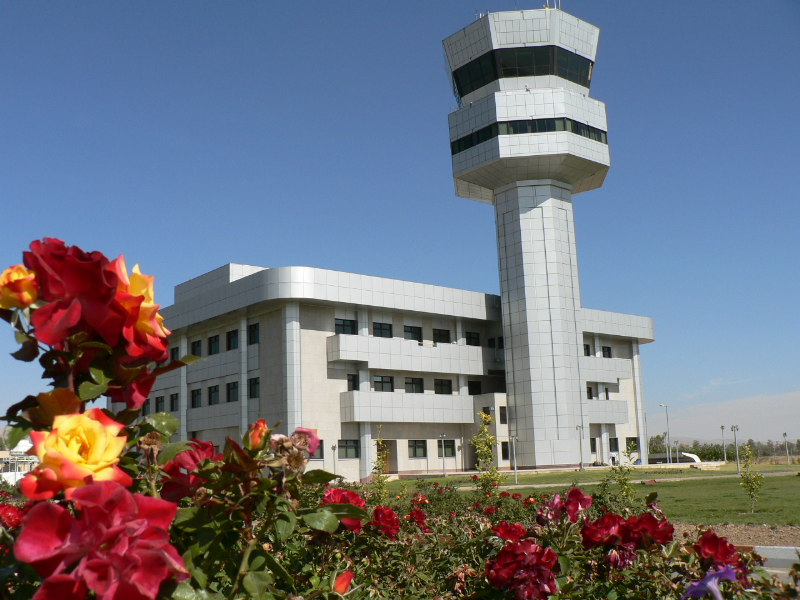
Shiraz Airport during the day. That’s the entire tiny airport.

Our ride from JFK to Shiraz and here’s how it went down:

Airbus from Manhattan to JFK (1 hour)

JFK to Istanbul (10 hours + 6 hour layover + 7 hour time shift)

Istanbul to Shiraz (3.5 hours + 2 hour delay + 1.5 hour time shift)

Shiraz Airport to hotel (longer than normal half an hour) ahh…are we there yet Papa smurf?

Total Travel Hours: 31.5

Drink up

Our flight took off two hours later than scheduled.  We got on the plane, took off and enjoyed our last taste of the west.   The guy next to me literally enjoyed his last taste.  He was busy getting hammered on Wild Turkey compliments of Turkish Airlines.  A could use a drink at that point but thought it wouldn’t be wise,  so I kicked back and enjoyed the in-flight entertainment “Jump the Broom” starring Angela Bassett and Loretta Divine.  Nice choice Turkish Airlines…where’s my drink?.  I didn’t bother bringing bans most Western reading materials so at that point I just kicked back, enjoyed ride and the movie of course.

Where Cash is King and what do they do with our finger prints anyways?

After that trip I was just grateful that Mahmoud was still there to meet us outside.  Getting through immigration took even longer since Tehran gets most of the overseas guests.  We needed to get the respiratory finger stamp and the guys at the desk fumbled around with the machine and quickly figured out how to use the thing.  While we waited the locals had a chance to give us the curious look over.  They were just curious since it was a crazy hour and we were two weary looking unescorted Americans looking for “It’s Okay to come into our country” stamp in our passports.  The guys at immigration were very nice and welcomed us to Iran.

IMG_3959

The airport terminal was tiny  and finding a place to get some Rials, Dinars, Toman or Khomeini’s – wasn’t difficult.  The only problem was that the largest Rial note Iran has is the 100,000 which is equal to $9.20.  We needed a lot of those bills since cash is king in Iran.  Our credit cards don’t work here.

We landed in the early hours of the day and I had a feeling that this information wouldn’t get to him in before he took off for the airport.  So it’s now 4am and we are heading to the hotel in our white Iranian Saipa 4-door as the sun comes up.   We’re in and the adventure begins.

Our Suite at the Niayesh Traditional Hotel

Our Suite at the Niayesh Traditional Hotel

Iran: What to pack ladies and what to tell the man to wear

IMG_5420
What the official word is. Our hotel won’t serve you if didn’t look llike this

What to pack

What men and women wear when visiting an Islamic ruled country like Iran is something most travelers should take time to study.  Men travelling to Iran should not plan on wearing shorts or short pants in Iran no matter what the temperatures are like.  It used to be against the law for men to wear short sleeve shirts,  but now they can wear them and style their hair like elvis.  It’s always good to pack at least one long sleeve collared shirt just in case.  It’s not uncommon for travelers to be invited to family celebrations or family meal.   It would be smart to dress properly for it.

Short packing list for the ladies :

  • At least one scarf that’s dark in color or at least not shear enough to see through and is wide enough to cover the length of the top of your forehead to a few inches below your shoulder line
  • Long sleeve Tunic that covers your neckline,  is long enough to go below your rear and is comfortable since it combined with the scarf will make you warm.  I found one at Muji here in NYC.
  • Good walking shoes that cover all or most of your feet.  I just took one pair of Keen’s Sandal’s like these  Somewhat ugly…yes…it was hot and they are comfortable yet passable.  Many women wear an Iranian knockoff of the Converse All-Stars Low Tops as well.
  • Comfortable pants or skirt that are loose and don’t show off your curves.  I wore my Northface Convertable Travel Pants.  Extra fugly…yes again.. but like the Keen’s, comfortable in the heat of September.  It helps that my scarf is pretty cool and my Tunic covers the not so flattering high waist of the pants.
  • Plenty of cash for new local digs

Of course,  things are getting better for women there but the law states that all women in Iran must cover their entire head and neck areas – usually with a scarf, wear loose-fitting tops which provide modest cover for roaming eyes, wear loose-fitting ankle length pants  and shoes which cover the entire foot while in public.  The moral (aka fashion) police are known to give foreigners a little leeway but it’s best to stick to the rules out of respect.  The easiest thing for women travelers who can’t find what they think is acceptable and comfortable is to buy clothing when you get to Iran or any other Islamic country.   Just be sure to pack or wear at least one outfit since once you land the law is in effect.

In light of this, I decided to add a shopping trip into our first day’s itinerary in Shiraz.  If I don’t find anything ,  I’ll just have to wear the same thing for 14 days.  It’s not like I haven’t done it before.  It’s a good way to stave off the urge to sleep the day away and make the best of a potentially wasted day.   Our plane journey will take us a day and a half – this includes  a 6 hour layover in Istanbul from JFK – but we arrive into Shiraz at 2am.  Ataturk is a great airport with many lounges to choose from.  The departure area has a decent mall where travelers can buy scarves and other clothing suitable for women traveling Islamic countries, and of course Turkish Delight.   Even some of these items pictured below.

Iran has some pretty tough dress code policies enforced by the moral police. Travelers are guests, must play by their rules – it’s their rules and I have intention on disobeying anyones rules no matter what.  I sound paranoid but I’m not taking any chances especially when it comes to clothing.   I ended up finding a tunic that would be good enough to get me there and scarves are easy to find.  Our first day was going to be a wash since our flight arrived into Shiraz at 2am so it would be a good day to do some shopping.  Here’s a government picture of what women should officially look like:

And here’s what most women looked like in Iran:
Ladies in Persepolis

Iran – The Plan

Our Plans are coming to fruition

Our flight on Turkish Airlines departs on Thursday at 11pm EST and lands in  Shiraz at 2am Saturday.  No worries since there’s no way to get around it.   Mahmoud from Pars Travel Agency  is going to meet us on arrival and will then  take us on a short 14 day tour.  The journey will take us over land and through the desert and visiting many UNESCO sites located along the eastern side of the Zagroes Mountains.    We will finish our tour in Tehran where we will tour museums and hopefully will have some time to enjoy  this modern and relatively new capital of Iran.   We will be taking another early morning flight out of  Tehran’s Imam Khomeini International Airport to Istanbul. Our trip was extended since while were in the neighborhood we mine as well turn the 5 hour layover into a 3 day stay.   Visiting Istanbul is never gets old and who can get tired of seeing the great Blue Mosque at night and walking the streets of the Sultanahmet.

Sunset in Shiraz

Rick Steves and other thoughts about Touring Iran

Jameh Mosque of Isfahan

Rick Steves managed to get himself and a film crew journalist visas to Iran back in 2008.  He too seemed apprehensive about the trip even with his travel resume and years of teaching others how to travel.  They were allowed to film 10 short days  and brought PBS viewer a very thoughtful piece about travelling to Iran.  It was a very bold move on his part since his target audience is made up of those who think European travel is exotic and a trip to Iran is not included in many of there bucket lists.  This show was all about going  in the front door of Iran with the promise that he would shed some positive light on country who can not escape its past thanks to western media.

The U.S. does it’s best to discourage its citizens from travelling to Iran.   The U.S. State Department Consumer Affairs site at least informing its citizens of the risks involved with travelling to that region and where the hot spots are.  It’s words should of course be taken seriously.

Taking risks is a part of everyday life and where you travel to may increase the likelihood of being harmed or taken advantage of.  Being well-informed and confident helps prevent such things happening.  Of course, personal safety is a concern for most travelers who venture away from home and into the unknown.  U.S. official warnings made me question what motivates me to travel to areas where there are potential dangers for me as a U.S. citizen.  The U.S. does it’s best to discourage its citizens from travelling to Iran.   The U.S. State Department Consumer Affairs site at least informing its citizens of the risks involved with travelling to that region and where the hot spots are.  It’s words should of course be taken seriously.

Is traveling to Iran was the smartest thing to do right now if ever?   The answer is yes there’s never going to be a good time it seems.   Researching the h@#ll out of it.  What else are you going to do while awaiting for the Fed-ex delivery person to come?

Thanks Rick Steves

Breaking the news to my family that a trip to Iran was going to happen was another thing.  Rick Steves  made it look so tempting since it’s been on our minds for years and guess what – my husband and I are going.   Couldn’t think of any reasons not to go – unlike family and friends who have lots of opinions on the subject.

The application process was underway and the journey itinerary with Pars Tour Agency in Shiraz on May 22nd.  I have to thank many including Rick Steves, a few supportive friends and family, and the large amount of positive trip reports made by others who had done the same journey for giving me the push to go.   I soon be relaxing in tea houses, getting lost in the alleyways of the souks and visiting Zoroastrian caravanserais and fire temples.

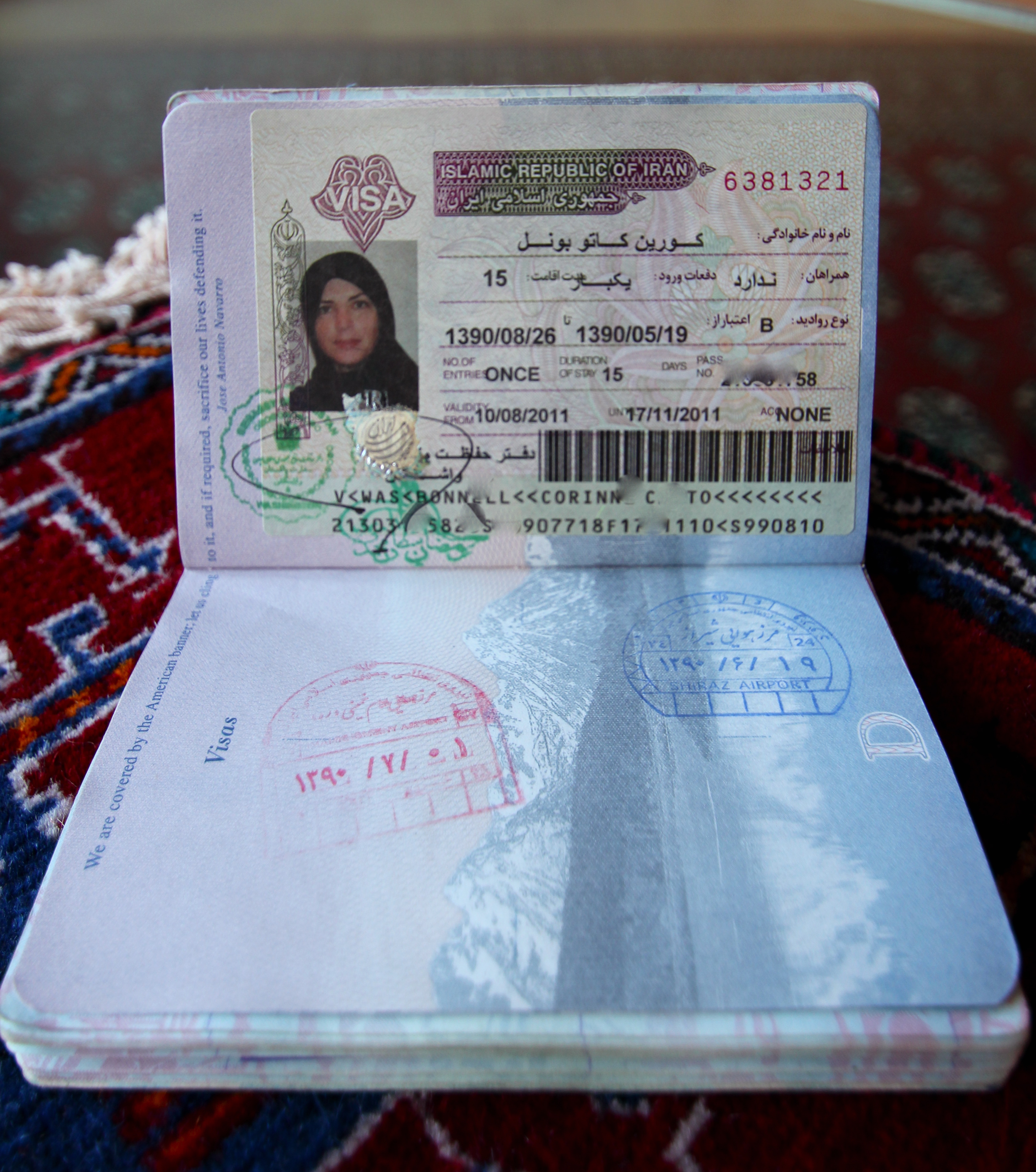
Surprisingly, many say that it’s common for US citizens to get rejected but this chart displayed on Iranvisa.com says otherwise.   We were well aware that we could get our visa within days of our scheduled departure.  A Persian-American friend of mine confirmed that we could be getting our visa one day and boarding a plane the next.  There’s nothing like watching airfares go up and down and not being able to take advantage of any deals.  No visa – No sense in buying tickets.

13 weeks later, our passports are back in our hands.  It’s late August and we leave in 2 weeks.  The scramble begins. We promptly booked tickets to Shiraz via Istanbul just in case we got rejected at upon arrival.  If we thought it would be wise to put Istanbul in the plan just as a back up.  It’s a pessimistic move but I’m getting practical in my old age.

The problems between the U.S. and Iran will unfortunately not be resolved anytime soon since some old wounds seems to take a very long time to heal.  History shows that there’s not good chance of the two countries will not be buddies anytime soon.  The most recent media circus involving a used Persian car salesman nicknamed “Scarface”, members of a Mexican drug cartel and an attempt to kill a Saudi Prince baffles me and many others.  I’m not sure what to make of it all.  Now, there’s even more travel warnings posted on the U.S. Travel site, the media and U.S. politicians are having a field day as the war of words resumes we have seen since the 70’s resumes.

Make sure and check out the travel warnings listed by the U.S. and even Great Britain but remember to also balance these warnings with some current information from those who have traveled to such areas.   Blogs and travel information boards found on the Lonely Planet and Trip Advisor sites are a great source for new and experienced travelers.   They are full of current information,  allow travelers to hopefully get answers to specific questions  and it’s a great place to contribute and help others in need of information.  Remember,  information is your friend.

Inspiration to travel to new regions, like Iran, sometimes comes from unexpected places like travel shows by Rick Steves and posts made by like-minded strangers on travel boards and blogs.    Do yourself a favor and diversify the information sources as much as possible before taking off.  You may even discover some “back doors” Rick is always going on about or make time to go off the beaten path and view the lesser known sites others usually miss.

The Skinny on the Iranian Travel Visa for U.S. Citizens

The process sort of reminds me of what it takes to get a Russian Travel Visa.  It involves some cash up front, a form of letter of invite, a detailed itinerary, and patience.  The Russian one seemed more to do with cash since it took a just few minutes to fill out the application, a few hours for a credit card transaction confirmation and later you have a letter of invite.    Iranian visas involve almost as much cash but require a little more patience.  In the end, a visa holder will be free to travel to a country full of hospitable people,  beautiful sights and see for themselves what goes on in a country who doesn’t get too much love from the mainstream media.

Here’s a breakdown of the Visa process:

Have plenty of patience because it can take some time to get your visa

Find a tour company that suits you and your budget.   Pars Tour Agency is our choice since they are based in Shiraz and came recommended..  Pars begins by providing the letter of invite aka Authorization Code for a small fee of 30 Euro.  It’s a requirement for U.S. citizens and the fees are different depending on who you use.

Wait for the Ministry of Foreign Affairs in Tehran to fax the authorization code to the Consulate of your choice.

If not approved, the agency can resubmit the application again and hopefully it will go through this time.  The Ministry of Foreign Affairs will then fax the approval document on to your chosen consulate office.

If approved, send or bring the following within 3 business days to the chosen Iranian Consulate Office:

  1.  Application form (my case #101)
  2.  Money order of $112/ applicant and $20 return postage fee made out to the Interests Section of the Islamic Republic of Iran
  3. Single Passport picture (ladies this means one with hajib and remember…no smiling) and your passports (see below)

It’s longer to get the authorization code  from the Ministry of Foreign Affairs in Tehran then it is to get the visa from the consulate.  Visas get issued by the consulate with a week of sending your passport, appropriate photo (women need to obey Islamic code which means donning a Hajib and remember…no smiling)

Ultimately, everything works out and the scramble to get everything done and the real fun begins.