The next stop was a short one to see a flame that burns in the honor of the highest deity in the Zoroastrian religion Ahura Mazda – the lord of Light and Wisdom
Fire Temple Atash Behram
The fire found inside this temple in Yazd has been burning continuously since 470 AD. It came to this simple building in 1932. The fire is of the highest grade and is referred to as the Atash Behram or Fire of victory. The flame is composed of fire from 16 different sources which have been collected from various flames. This massive flame continues to burn behind the glass for us all to see.
Sneakin’ a peek at the Atash Behram, “Fire of victory in Yazd
When visiting this site it is more for seeing the modern-day impact of Zoroastrian faith in Iran. There is nothing more here then a simple building with signage only in Persian – this is where Mahmoud – our wonderful guide- came in very handy. The purpose of our visit was to both pay homage to those who still practice this ancient faith and show support for the community. Of course, this encouraged me to learn more about something I knew little about before our visit to Iran. Yazd has many of the few surviving followers of the ancient religious practices of Zoroastrianism in a country dominated by Islam. I wish them well and hope their faith continues to prosper in the days ahead.
View from the top of the Towers of Silence in Yazd
It was hard leaving the chill environment of the Zein-o-din but the journey north continued. Our next destination was Yazd known to be the center of Zoroastrianism. We of course had a few Zorastrian highlights to see before the end of the day. These included the ancient burial platform called the Tower of Silence on the southern end of town; the Yezd Atash Behram; and the Dowlat-abad Windtower was our last stop before checking in to our hotel – the Orient Hotel.
Dakhmeh in Yazd
Tower of Silence or Dakhma – Yazd
The Sassanid era was were the practice of placing the dead on top of the the Tower of Silence began in 3rd — 7th century BC
The dead body was thought unclean and to bury it or burn it would pollute the earth either way. The body was instead placed high on top of the tower and left to the elements until all that was left were bleached bones of the departed. The remaining bleached bones were placed in a center well which contained lime and phosphorus. The bones then turn to dust.
Platform of the Towers of SilenceZoroastrian Tower of Silence in Yazd
Today, this practice in Iran has been abandoned due to the shortage of vultures, population growth in the areas close to the towers themselves and falling out of favor with modern Zoroastrian followers. The burial ceremony is quite elaborate and for more details check out this link.
Modern Zoroastrian CemataryOrient Hotel in YazdView from the roof of the Orient Hotel in Yazd
Caravanserai’s were the hostels of the Silk Road hundreds of years ago.
Sunseting over the Zagros Mountains from the roof of Zein-o-din
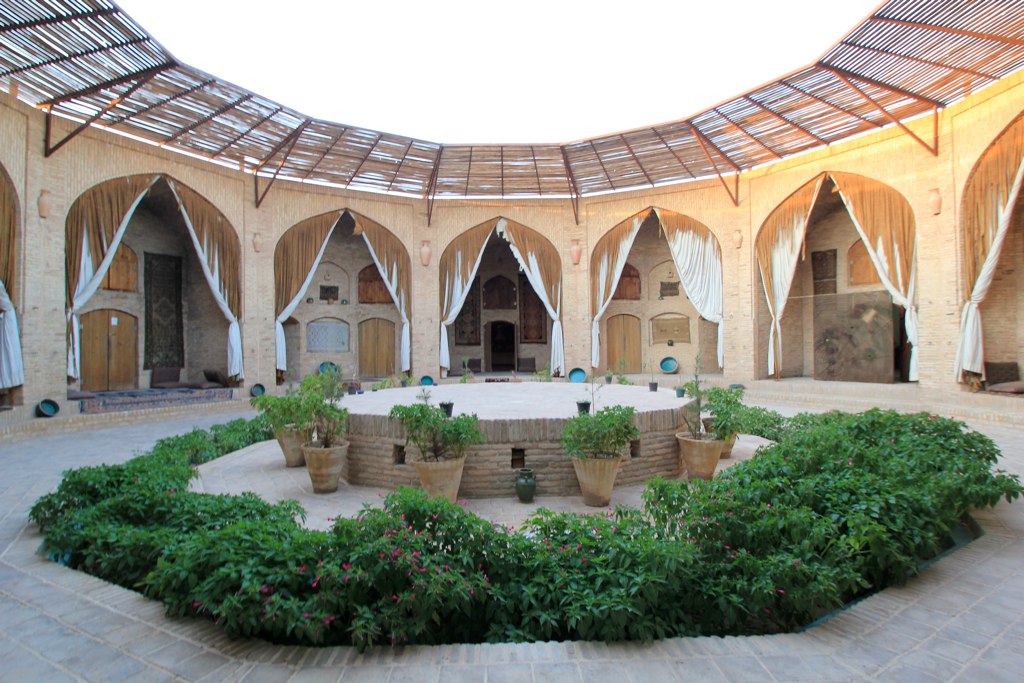
The Zein-o-din Caravanserai is a special place in the middle of the desert in Yazd Province. This one was one of two which is circular since most were square. Some visitors take day trips here and others treat themselves to an overnight stay. My husband, Mahmoud, his friend and I were surprisingly the only occupants that night. We were joined for dinner by a group of Spanish women and their guide who were staying in Yazd. They had only come to enjoy a fabulous meal, watch some traditional Baluchi martial arts performance and talk about where they were going to go shopping the next day. They didn’t realize my husband speaks spanish.
Dusk at the Zein-o-din
When they took off, it was just us. The moon was full that night and the stars were the brightest I had seen in weeks. We don’t get much stargazing opportunities at home in NYC. We had the run of the place and it was such a beautiful night. We all ended up sitting on the roof, enjoying the views, tea and a few hits of shisha. Life was good.
Moonlit courtyard of the Zein-o-din Caravanserai
There were once 999 working caravanserai or khan along the royal road which extended 2500 km from the ancient capital Susa to Sardis. Shah Abbasi the Great wanted to provide travelers in Persia a safe route of passage and resting places along the way. Each stop is 30-50 km from the next which allowed them to only have to travel a day between each. The Shah chose 999 because it was a number that could simply be remembered. There construction spanned over 10 decades are still found along the highways and desert plans of the Silk Road territories. Some caravanserai in Iran are still in use in some way or another and many have been neglected. Some function as storage houses for farmers and other lucky ones are once again resting places for travelers like the Zein-o-din.
Early morning view of the desert caravanserai next door to Zein-o-din
It took the current owners took 3 years to renovate and they did a fine job. The rooms are separated by heavy curtains and simply furnished with soft sleeping mattresses on top of wool rugs. I had the most restful sleep here and the bathrooms were fabulous. I wish I could have spent one more night but the visa clock was ticking. Still much to see ahead to see and no time to dilly dally. There’s always next time.
Room inside the Zein-o-dinGreat place to have breakfast before heading out
This was our first day on the road since my husband and I landed in Shiraz just four days prior. We had visited Persepolis and now we were heading to Cyrus the Great’s burial site and his capital Pasargadae. After that, we continued on to see the Beehive Ice House structure that was once a common fixture to the landscape in this area. Very few still remain intact today given that they are pretty fragile. The last stop of the day is to see the 4000 year old Cypress tree. It’s located behind the Ice House so if you are in the hood stop by for a look. Try to make a donation to the nice people who are looking after it’s well-being. I say quick stops not because I don’t want to spend more time looking around but the visa time is ticking.
Pasargadae
Me at the Tomb of Cyrus the Great
It’s a place not to be missed. Pasargadae is an amazing site. The Iranian Cultural Heritage Organization (ICHO) the UN and a number of individuals recently saved it and Persepolis from being submerged under water. The work on the Sivand Dam has been delayed for the time being. This has given some skilled archeologists and scientist time to explore the area. Some amazing things like a cave believed to be occupied 7000 years ago and 9-mile dirt road believed to be the Royal Passage of the Achaemenids – to name a couple – have been discovered. More clues on what the
The garden of gravel was once a true Persian garden called the Chaharbagh. Modern examples of this four-sided style is seen at the Taj Mahal, the Fin Garden in Kashan and Amir Chakmaq Complex in Yazd – to name a few. Cyrus’ tomb was once surrounded with streams of running water, tall cypress trees and flowering plants like those seen in those gardens today. Many other travelers say that it’s not worth the visit but my visit gave me inspiration to learn more about Cyrus the Great. The site itself is more than a pile of cut rock but a place where huge amounts of history took place. Here’s more information about early excavations of the site.
Dutch Artist sketch of Cyrus’ Tomb in 1672
Abrkouh: Beehive Ice House
Yakh-chal or Ice House in Abarkuh
The Beehive-shaped tall abobe Ice Houses for desert climates like those found in Iran around 400 BC. Water collects in the shallow trenches that collect water over time. The ice was later broken up before spring and stored deep inside the interior of the dome. The Ice House is then sealed off until the hot summer months when the ice was needed to make a drink cold, preserve food or make rosewater flavored faloodeh.
. For further explanation about these structures and others like them in the Middle East, check out this link.
These were used through out the middle east and today are used for storage or living quarters like these smaller Beehive houses in Syria.
Beehive storage houses in Syria4,000-year-old Iranian cypress
The 4000 year old Cypress Tree
The cypress tree plays a significant role in Persian culture and influenced the design of famous Persian Gardens in both the past and present. It’s likeness is carved on the walls of Persepolis, referred to in many Persian poems, woven into carpets and common motif found in decorative tile works inside mosques and homes of Iran. It stands for many things including longevity, strength, freedom and the state of mourning.
I began noticing the presence of the cypress tree everywhere in my travels. In the center of miniature paintings, woven in countless rugs in shops and in about every garden visited. This tree today is in danger of being destroyed by modern man. The root system of this 33 meter tall tree extends as much as a mile from it’s center – local undertaker mentioned this when we visited. This means many roots lie underneath some near by farms and newly built roads.
The local Department of Environment of Yazd Province is trying to raise money to buy land near by so that they can ensure the future safety to the oldest living Persian. It is also listed on the UNESCO world heritage, so please visit have a look if you are near.
The stay and Shiraz was a great one but it was time to hit the road and get a change of scenery. We passed by the Qur’an Gate and headed North out of the city. It would have been great if we could have driven though it like our guide Mahmoud used to when he and his family would go on a road trip. There are prayers which followers believe will give them good luck in the journey ahead written in the arches of the passageway. Just passing by it hopefully does the trick.
Qur’an Gate (Dar vazeh Quran)
We had a great driver along with us this time. He was a friend of Mahmoud, just as friendly and a great driver. We headed out early so we could pack in a several stops along the way to our night at the Zein-o-din. This included a stop in Pasargadae, the city of Abrkouh to see the ancient beehive shaped adobe icehouse, the city’s ancient 4000 year old cypress tree, and then finally to one night at the Zein-o-din Caravanserai. This is what I mean about there being too much to do in a limited amount of visa time. It was great to have Mahmoud there to sort out the details.
The desert highway from Shiraz to the Zein-o-din Caravanserai
Biggest Surprises and what surpassed my expectations in Iran
There’s only so much blog reading and picture browsing a future traveler can do before setting out on an adventure to a foreign land. Information that’s out there via blogs, pictures news articles – reliable and current on travelling to Iran isn’t as prevalent as say Europe or South East Asia. The official news publications are just full of endless stories that conger up fear and bloggers tend to be on the opposite side saying how hospitable the Persian people and how beautiful the landscape and architecture is. I sorted through it all and did the trip. This is the basic likes and dislikes about what I personally witnessed while traveling a well beaten trail through central Iran.
Wonderful hospitality despite the constant bullying and bickering going on between other nations and theirs
It is said over and over again on various blogs, articles and travel shows that Persians are undoubtedly the most friendly and welcoming cultures of the world. I also immediately comfortable when arriving 2 hours late after a 30+ hour journey from JFK to Shiraz International. I’m an amateur hijab wearer who is both jet-lagged and half conscience – where am I? I’m alright but I’m concerned that my semiconscious self is not going to notice if the scarf falls off my head. At least it’s a very odd hour and not the middle of the day. I, as a guest, am little nervous about offending anyone at this point. At passport check we are the only ones in the “Foreigner Line”. The officials get all the locals done and soon start to check out our credentials. They apologized for not having the finger printing device working immediately. No worries. It only took a few minutes for what seemed like just a quick warm up and connection to the computer. It was a short wait and I wasn’t moving too fast anyways.
Our start was much easier then the worst senario I had in my head before departing almost a day and a half ago. I never had any close wardrobe malfunctions and very little culture shock. The people I met along the way were wonderful. It was not all great but what trip is perfect? Here’s some general thoughts – both good and bad to be balanced- about my experience in Iran.
Amazing Architecture anyone can enjoy without a PhD in Ancient Architectural Studies
Jame Mosque in downtown Yazd
This region is full of buildings, archeological sites, ancient texts, art and textiles which date back thousands of years in some cases. It’s amazing what still remains to be seen today after countless wars and military conflicts have damaged and destroyed so much in this region over the centuries. Many things have been taken or sold as some claim to museums in western Europe and North America. It’s great to be able to see it in person like the permanent exhibit of Islamic Art that recently opened up at the Met here in New York City, but there’s nothing like seeing it in person where it came from.
MET Museum Islamic Exhibit NYC
Much more is being uncovered by those working hard under skilled architects and hopefully more will be available for the public to see in the future despite current political conflicts.
Inside the Bagh-e Dolat Abad in Yazd
Too much to see in too little time
Isn’t that always the case? We were allowed 14 days since that was how long our required tour was going to last. No tour – no guide – so no more days are needed on our visas. Tours are not cheap so we’ll have to go back. The rumor mill says that once the first visa is granted then the next is easier to acquire, it’s faster and more days could be granted.
Lots of bad music
Blame the US embargo for this one. Our guide mostly played traditional persian music as well as Persian Pop music while we traveled along. One day the subject of what kind of music we liked came up. Of course, we are fans of Led Zeppelin, Silversun Pickups, Radiohead – just to name some better known acts that he might be familiar with – well Mahmoud just smiled and gave a few nods – he more than likely heard of them but not a fan. He said he was a fan of Mariah Carey, Celine Dion, and the Eagles – all of whom sing about romantic new love and getting dumped – sound familiar? Mahmoud was a big fan of the poet Hafiz like many Persians. He also was being his hospitable self and decided to give us a break from Persian music – which I add was enjoying – and put sometime on that he thought we would like. Not sure if it was Celine or the Eagles but the CD player was busted and the Persian music resumed.
Persians feeling they needed to apologize for their government
Na’in’s Jame Mosque
Not many people are happy with what either side has been doing lately or the last 30 years for that matter. I hope there is a time that the region will be at peace. Our countries governments and political powers that be must start looking forward. The Persians still harbor resentment of the Muslim conquest of the Persian empire hundreds of years ago. The decline and fall of the Sasanian Empire led to the rise of Islam in a region whose religion was dominantly Zoroastrian religion in Persia. and just about eliminated their form of Islamic faith and Zoroastrianism.
When the fire temples stopped being used Zoroastrians began being buried in cemeteries near by
The new generations want more freedom to do little things like sporting fashionable hairstyles and wearing clothes and jewelry that express their individual personalities.
Here’s more pictures of the interior of the Arg of Karim Khan. I asked what this hole was for and my guide just said “It’s just a hole” and strudged his shoulders. Doh…Sometimes you have to ask those dumb questions. It was probably just for air since it gets pretty steamy in this area of the world.
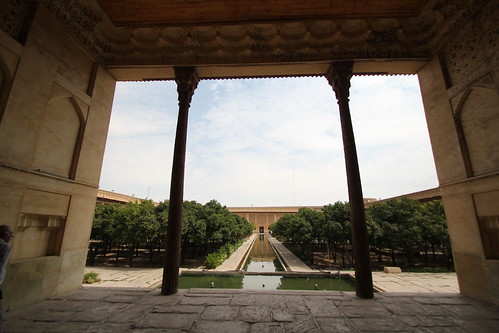
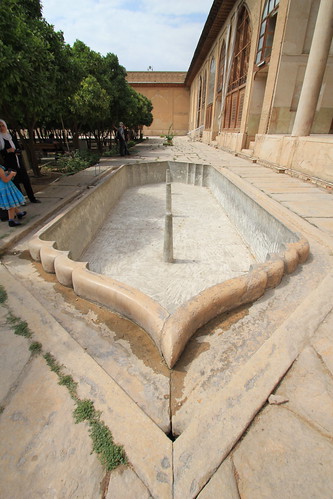
Classic Persian Garden with fruit trees and center poolCourtyard inside the Arg of Karim KhanBeautiful gardens of the Arg of Karim KhanSide room of the Arg of Karim KhanWooden Columns of Arg of Karim KhanWater Fountain inside the Arg of Karim KhanArg of Karim KhanCeiling of the bath that leads to the leaning towerDetails of bath interior at the Arg Karim Khan
The fortress known as Karim Khani Citadel today shows signs of age. There’s a tilting tower, missing columns and a Qu’ran missing. It’s almost 300 years old so all of this isn’t unexpected. The structure was the main residential palace of Karim Khan-e-Zand and his dynasty and later in the mid 20th century home to prisoners beginning in 1936. It closed in 1971 and is slowly getting much needed repairs after centuries of misuse and vandalism.
Friendly locals we met outside the Arg…the statue looks like a Brit but not sure who it represents
The Citadel was looks like a medieval castle complete with a dry mount surrounding the tall thick outer walls. The outside is simple but the inside contains traditional Persian gardens and rooms enclosed with colorful red, blue, yellow and green pained windows. Karim Khan-e-Zand made Persia’s capital Shiraz and built this complex for himself and his militia in 1766-7 AD. The humble leader decided to loose the title of king and decided to be known as a regent or Vakil in Farsi. He hired the best designers and builders to make his fortress and they used the highest quality materials.
Simple exterior walls of the Arg Karim Khan..easy to see additions made in both high and designThe leaning tower of Arg of Karim Khan up closeLarge tile image of the killing of the white devil by Rustam made during Qajar dynasty
When the Qajars gained power over the weaken Zand dynasty the capital and most of it’s Notice the columns made of wood that support one end of the inside pavilion. The originals were made of marble and were stolen. They were at least replaced with the simple wooden ones that remain here today.
The elephant in the room of this castle is the noticeable leaning in the tower at the far southeastern corner. The Khan constructed an underground septic system and his bathhouse resided inside this 14 meters tall tower.
Bath inside the leaning tower of the Arg of Karim Khan
The water table has lowered substantially over the decades and hopefully something will be done about the obvious separation of it and the supporting walls attached to it. It will probably just take a minor earthquake to release the tower from the rest of the fortress. Let’s hope this doesn’t happen before it’s given a proper patch job. Right now, it looks as if someone just took a bit of gum and filled in the open wedge.
Southwestern observation tower which contains bath house responsable for the lean
Inside the Arg of Karim Khan is simple because much of its treasures were stolen or removed after the Zand Dynasty was conquered by the Qajar. The marble pillars were removed by the Qajar conquers and brought to Tehran where they made the new capital of Persia.
Wooden Columns left behind by the Qajars after the Zand Dynasty was sacked
The floor of the inner courtyard is made of large stones brought in from the surrounding mountains of Shiraz. The workers were paid for the amount of stone they laid down. The way that they kept track of which stones the individual brought in was by a symbol that was carved into the top of the stone. These can still be seen today if you look at the stones on the near right corner of the main entrance. This information can’t be confirmed online and is something our guide pointed out to us when we entered the courtyard. I was too much in awe of the interior that I forgot to get a picture of it. I guess you’ll have to see for yourselves.
It was the third day into my trip to Iran and my husband and I were ready to take out on our own. The jet lag had finally faded and the streets of Shiraz were becoming more familiar. We were on a “tour” but it was getting a little stifling and we needed to get some air so to speak. The visit to the Valik Mosque the previous day made a big impression on us and we wanted to go and see it again. This time, it wouldn’t be in the middle of the day and without someone patiently waiting for us to move on to the next site on the day’s itinerary.
The Valik Mosque is very colorful and the tile work of its walls is full of flowers, birds and geometric patterns characteristic to the city of Shiraz. When I think back to my visit to Shiraz it’s the one site I felt summed up the beautiful city. It’s best to visit late in the afternoon and sometimes this may coincide with evening prayer. It’s not a working mosque, as mentioned before, but many locals still visit for prayer. The small admission visitors from out-of-town pay goes toward the continuous maintenance of the grounds so don’t feel like you are intruding but be aware of late day worshippers when you are looking around in awe and taking a million pictures. This is when it gets tricky keeping the hijab from slipping off my head and getting pictures of the tall walls at the same time.
Vakil MosqueThe Tree of LifeCourtyard of the Valik Mosque
Ceiling inside the Valik MosqueLooking North inside the Valik Mosque






You must be logged in to post a comment.