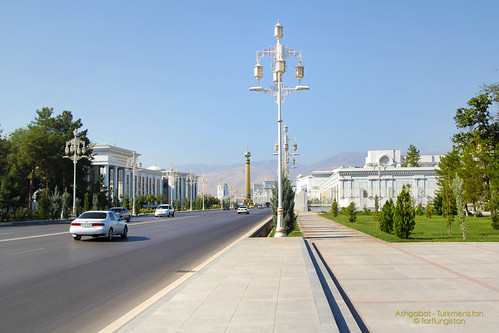
The phrase ‘lost to the sands of time’ tends to conjure up thoughts of mighty empires that have faded away into the desert. Nisa, the first capital of the Parthians, is no different in the dusty hills a short distance outside of Ashgabat. The spectacular mountaintop setting on what is now the Turkmenistan/Iran border belies an eery silence of its literally lush past. Peaceful, yet one has to wonder if this is the fate of future realms as well.
If a visitor just stayed in Ashgabat and never left the city limits then they would never think that it is literally an oasis in the middle of the water parched Karakum Desert. Fountains are bursting out clean water and offer some much-needed relief from the heat. The task of keeping the city and its surrounding parks both clean and green is a daily battle for the small army of city workers.
It doesn’t take more than a 5 minute drive from the city center to see the picture above. The Kopet Dang mountains in the south of the city mark where the vast Karakum Desert really begins. Here, there are no water fountains, air-conditioned bus stations or green parks. The newly planted evergreen saplings appear to be an effort to liven up the place, but it’s hard to think that they have any chance of a long life without water to feed them. It’s a hard life here in the desert even if you are in a country rich in resources.
President Gurbanguly Berdimuhamedow has a bold vision of doing the nearly impossible. He wants to transform the desert into a lush and green forest. His program is currently throwing money at the problem. This vision is a positive one that many would love to be brought to fruition, but it’s not too hard to see how this one ends.
The near-empty streets of Ashgabat add to the eerie silence of the memorial to the 7.3 magnitude earthquake in 1948 that leveled the city and killed tens of thousands. Raising from the ashes of destruction on the back of a bull (traditional symbol of strength) comes a Golden Child (the future president, Saparmurat Niyazov).
What do you get when you combine Riad, Pyongyang and Las Vegas? Welcome to Ashgabat and the “City of Love”. The only thing french here are the architects who designed the palace Turkmenistan’s current leader President Gurbanguly Berdymukhammedov. Ashgabat or Ashgabat translated into Farsi literally means “City of Love”. This is what I have learned so far about this city before arriving. Our plane from Urumqi descended from the darkness of the Eastern suburbs into a valley of sparkling neon lights and glowing white towers. The colorfully lit city appeared lively from above, but we soon found out it was more like the typical 80’s sitcom plot where the well planned party that no one shows up to.
The customs and visa formalities went as quickly as they could after landing at the Saparmurat Turkmenbashi International Airport. We arrived in the early morning hours and our guide along with a driver were waiting in the empty arrival hall. We were anxious to get to our soviet style Hotel Ashgabat after the long flight. The guided tour is still a required for those wanting to visit for more than a few days and every minute is precious. The payment for this tour was due upon arrival in cold hard cash. It seems wise to pay with cast rather than making a pre-trip wire transfer.
We got our first glimpse of the city on our short trip from the airport to the Hotel Ashgabat. Our guide bid us farewell and said to just stop by the office in the morning. I had a laugh when his directions from the hotel to his office included “it’s the white building across from the shopping mall.” I was too exhausted to ask more. I just wondered if the city meet expectations the next day? Hopefully I’ll get to take some good pictures and maybe find that there is a way to get online here.
The sites of all over China are slowly being torn down, added on to or just demolished into a more appealing and high ticket worthy site. The desert town of Turpan or Tulupan is no exception. Despite this, some sites in the area still attractive enough to justify an uncomfortable day of riding in a van over pot filled roads without air conditioning. Visitors also need to learn to look beyond the cluttered with junk stalls, dressed up camels and buzzing two-seater planes that obstructed the view and take it for what it is fast becoming which is a genuine tourist trap.
Here are a few sights worth seeing:
The Xianjiang Regional Museum
The Turpan Museum in the Xinjiang Province China
Silk Road History inside the Xianjiang Regional Museum in Turpan
The Xiajiang Regional Museum here is most travelers first stop before heading out of the city. The free museum offers great overview of the history of the area. This is the best way to help visualize how the area could have once looked like, and make a plan of what to see before heading out. The museum also is a great way to take a break from the mid day heat in the summer months.
The Ancient City of Jiaohe
The Jiaohe Ancient City outside of Turpan
The Jiaohe Ancient City is mostly ruins but the scale of it and the surrounding landscape make it well worth the trek out. It was tour bus free the day we arrived. It was later in the day so the views were spectacular and the vendors were too tired by then to even bother with us.
The Flaming Mountains
The mountains are along the highway that leads to the Bezeklik Thousand Buddha Caves making it an easy stop along the way. The subterranean museum/gift shop isn’t really that interesting, but the mountains beyond the entrance, the paragliders and dressed up camels are a beautiful especially at the end of the day.
The Emir Minaret
The Minaret itself is worth a visit, but don’t worry if it’s too late the enter the mosque area. It closes around 4:30pm and in the summer the sun doesn’t even set here until around 10pm. The Mosque and Minerat is fenced in and it’s surrounded by fields of grape vines and an older muslem neighborhood. It’s a surprise to see that it remains untouched by the authorities. Many of the homes contain second stories which are essentially large windcatchers which help cool traditional desert homes during the hot summer months. It’s easy to get lost here so it’s good to carry a good map or a GPS device if you got it.
Windcatcher topped home neighboring the Emin MinaretThe Emin Minaret surrounded by Grapevines in Turpan ChinaWhere Raisins come from in Turpan
We decided since we got sidetracked in Dunhuang that we had to at least travel to Turpan during our extended layover in Urumqi. It is unfortunate that it’s the worst time to visit the “Death Valley” of China but we’re here and not sure if we will be in this part of the world anytime soon.
Remaking of the Silk Road near the Flaming Mountains outside Turpan
Bus to China’s Death Valley
Camels for hire at the Flaming Mountain outside of Turpan – Xinjiang, Chna
The bus from the long distance bus terminal in Nianzigou easiest and cheapest way to get to Turpan. Public bus No. 51 drops off passengers in front of the station and across the street from the Urumqi Water Park. The public bus costs 1 RMB and you pay when you get off. A one way ticket to Turpan is currently 20 RMB per person. The VIP is in name only. The buses have some miles on them, the seats are a little rickedy and there’s a bucket sitting in the middle of the aisle which I gathered was for trash? At least the ticket is cheap and the ride isn’t really that long. Travelers should get an early start to secure a front seat on a direct bus that takes about 2 1/2 – 3 hours. Tickets are assigned to a seat number, and if someone is sitting in yours don’t hesitate to politely give them the boot.
Desert Transition from China to Central Asia
Turpan is officially in China but has more of a Central Asian feel to it. The landscape, the street food, and the diversity of the local people are just a few of the first things that can be seen just a few steps from the bus terminal. The haggling for everything from hotel room price to the cost of a car for the day begins here. Bargain hard.
Turpan is second lowest depression in the world and holds the title of being China’s furthest point away from any ocean. During the end of July, standing outside in the middle of the day in Turpan pretty much feels as if I am standing in front of an open convection oven. So yes, it’s HOT and probably the most uncomfortable time to be here. The one advantage we have is lesser amounts of package tour hordes to deal with at the sites themselves. The sites are slowly being reconstructed by the Chinese Government making less authentic and turning into more like theme park attractions. There is still much to see, but they work fast here. So, there is no doubt that what remains somewhat authentic today could be literally gone tomorrow.
To Book a Room Ahead or not?
Turpan is a sort of town where getting a room on arrival is doable. The town can easily be visited in a couple of days depending on the person. The rates are negotiable upon arrival. Booking on the spot will lower the higher rack rate and it’s always good to see the room before making a commitment.
Turpan Hotel and John’s Information Cafe – Good Food and Cold Beer
We had a hit list of options and started with the best option location wise. Our first choice was the Transportation Hotel located in the bus station. It gets good reviews on Trip Advisor and is new. The hotel is nice, but I would probably try out the Turpan Hotel. John’s Cafe on the property serves great food under a grapevine terrace, cold beer, wi-fi is available and the staff are very friendly. The hotel is a bit dated, but other travelers we met said they were happy with the hotel. Despite what the LP Guide says, John’s Cafe does provide travelers with travel information and can arrange car services to the area sites.
Dunhuang is different things to the various travelers who either arrive by private car, bus, train or plane into this “City of Sand”. Some come here seeking to concur the Gobi Desert by camel and others are simply looking to view what’s left of the ancient Silk Road. There is enough here to please both groups.
The front of the Mogao Caves – DunhuangEntrance to Mogao Caves – Dunhuang
The Mogao Caves
Dunhuang is currently one of China’s top domestic tourist destinations and currently under construction. The Mogao Thousand Buddha Grottoes just outside of town is getting a complete makeover, like much of China’s top tourist sites and cities these days. According to our tour guide, the ancient Buddhist caves dating back to the 5th century. A.D. get up to 6,000 visitors a day during the high summer season. Carbon dioxide has been taking a toll on the interior paintings that have been open to the public since the 1980’s. The damaged cave doors will soon close when the brand new Mogao Caves Museum opens in a year or so giving the public a shiny new camera friendly scene to witness.
Yadan Landforms inside the Yardung Geological Park outside of DunhuangThe Jade Gate of the Silk Road outside of Dunhuang
The current ticket price to tour the caves is ¥160 + another ¥20 for a guide for Non-Chinese. Was it worth it? Yes, now it is even though no pictures are allowed. In the long run, the site will get a rest and hopefully will be properly preserved. At least some will be may happy with the change. I’m sure many welcome the chance to be able to take pictures despite the fact that they aren’t the real thing.
The Yardung Geological Park
To some, the desert areas that make up the Yardung Geological Park west of Dunhuang is just a bunch of rocks shaped supposedly like Chinese mythological creatures and leftovers from the good old days of when this area was the gateway of the Silk Road. It was once the area where dinosaurs roamed, a very large lake once stood. Centuries later, trade masters, maybe even Marco Polo, lead their camels through the Jade Gate. It was a place to refuel and pay taxes before continuing west to Central Asia and east towards Chang’an. Little has been left behind but there is still much to see here in the Gobi Desert even if it’s a rock shaped like a Phoenix.
Singing Sands in Dunhaung
The Buzzing Sands
The dunes resting next to fruit tree groves at the western edge of town where once a place where travels could rest and enjoy a sunset while listening to the wind pass through the orange sandy hills. They have long been known as Mingsha Shan or the “Echoing Sand Mountain”. Today, the luxury Silk Road Hotel Resort, cranes and workers building more resorts, thousands of camels and all types of recreation vehicles all can be found in amongst the dune landscape. The buzz of paragliders drowns out any singing going on here.
A ticket ¥180 gets visitors though the gates, into a rented a pair of orange booties and away off to explore the dunes on the back of a camel or inside of a less than safe looking paragliders. Many visitors can skip all of that. There are roads that lead into the apricot groves and end where the desert is less crowded. It is still possible to see the dunes minus the tour groups and hubbub of the theme park it has become.
Keeping it Real in the Desert in ChinaDesert Fun in Dunhuang
Kumamoto-Jo Castle in Kyushu – JapanMt. Aso – Kyushu
Japan will always be on the top of my travel list. June was spent traveling around the southern parts of Japan. Previous visits were short, but we now had the ability to spend as much time as we liked or could afford on the weak USD. We started in Osaka since a couple of friends were getting married in May on Lake Biwako near Kyoto. After that, we grabbed a Peach Airlines Flight to southern island of Kyushu and spent a couple of weeks hopping around the volcanic island. We ended up just skirting the usually wet rainy season they experienced just a few days after we flew to Tokyo.
We ended the Japan trip in Tokyo. We decided to rent out a service apartment in the Shinjuku. Here, we planned out our upcoming Fall trip and sorted out most of our visas to the “Stans” of Central Asia, spent our days hanging out with friends, enjoying the city, local food and the luxury of having access to real high-speed internet.
Departing Gate at the Narita Airport – TokyoArrival Gate at the Beijing Airport
Bumpy ride to Beijing!
It’s been a few years since I have experienced one of those flights that makes you swear you will never fly again. We landed after the pilot decided to head straight through a storm that was heading towards Beijing. When we landed, most passengers were flushed and blurry eyed as we streamed into to arrivals terminal at Beijing International. Some fellow passengers were stained by the flying sodas, juice etc. that flew through the air as our plane made an unexpected drop during dinner service. I managed to escape unscathed. I was just so happy to be on solid ground once again. The pilot did manage to get the plane down ahead of the storm, but the dark clouds caught up streamed in and opened up just as we arrived into the city.
The downpour started just as we got off the metro. We got trapped at the metro station without umbrellas or a small boat to get us through the flooded streets to our hostel. We ended up spending about 1 hour waiting for an opportunity to make a run for it. The journey from metro to hostel required some puddle and sidewalk sink holes dodging but we finally made it.
We managed to drag ourselves and our stuff safely to the Hutong west of the Forbidden City that first stormy night in Beijing. We got soaked but our stuff wasn’t. I’m not sure how we pulled that one-off, but we did thankfully.
Waiting on a Visa…
We had just one night at the Hutong Hostel and later moved to an apartment on the other side of Beijing until we headed west towards Central Asia in a couple of weeks. Hostels are great but having a washer, kitchen and quiet work area were necessary this time.
We were here to get our Turkmenistan Visa and see more of post-Olympics Beijing. It was a lot of work for all the back and forth, waiting, some more waiting all for a 10 day required tour. Beijing is a large city so there’s much to see and do while we wait.
Tiananmen SquareMilitary Museum – Beijing
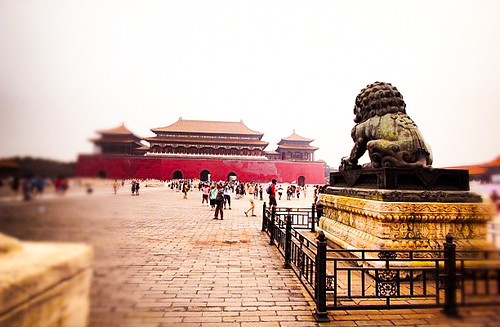
The National Museum, the Olympic Park and the Military Museum were the top three on our must see list this time. We got our Turkmenistan visa, saw the top three, and managed to see both the Forbidden City and Tiananmen Square again.
Our time in Beijing soon came to an end. With our visas in hand and better idea of what direction we will be going in the next few months, we boarded an Air China flight to Urumqi. In Beijing, we managed to survive both the elevated AQI levels and a couple of storms that pummeled the city during our two-week visit. I’m sure Beijing will all be a totally different the next time we stop by for a visit or maybe not?
It’s been a long time (a few years actually) since I’ve written anything substantial in a blog post, so please forgive me as I get my ‘blog legs’ back in order. Oddly enough, this will start off with a case of deja vu from early 2008. Back then we were traveling around Laos and Vietnam and were trying to do some forward planing for the next few months. Singapore, the Philippines, Japan, and China were on our wayward list, but what about after that? How about Central Asia or “the ‘stans” as they are colloquially known? Thoughts of Mongol hordes, glorious Persian architecture, and towering mountains filled my head and invoked some serious wanderlust. We could travel by land across China and fly out from somewhere in the region (Tashkent perhaps?). A great way to spend late Spring/early Summer. Easy, right?
A few days of detailed Internet searching put that notion of ease quickly to rest. Central Asia is definitely not high on the tourist/backpacker roadshow and gathering information on a general route through the region was few and far between. Tales of “Letters of Invite”, mandated tours, and Soviet style bureaucracy left a distinctly dry feeling in ones mouth. We would either have to get visas as we went (less than ideal given visa constraints) or would have to get them all at once in Beijing (the only place in East Asia with all five consulates). Given that we were coming into China on a 30 day non-extendable visa, logistics among the embassies would be tight. This was right before the Olympic games and the Chinese authorities were starting to clamp down on giving out/renewing visas. Ultimately, however, our hopes were dashed when we arrived in Beijing in early April. The March 2008 events in Tibet resulted in the closing off of western China to foreigners (i.e. anything past Chengdu). We decided at that point to move on to North Africa and would revisit the plan for Central Asia at a later date. The one upside was that we started following the Uncornered Market folks, as they were one of the few blogs out there with information about the region.
Fast forward to 2012 and we’re in East Asia again. After spending three months last year dealing with visa/tour fun for our September trip to Iran, acquiring visas for Central Asia is easy by comparison. It took us a total of 10 calendar days (i.e. Monday to the following Wednesday) to get four visas for Uzbekistan, Kyrgyzstan, Tajikistan, and Kazakstan in Tokyo. This can be done a few days earlier (say 7 or 8) if you’re prepared and quick enough on the metro.