Yazd – the City of Badgirs

I usually like to find attractions along the way which are overlooked and ultimately not overcrowded. My interests are more than checking off a list which usually means seeing what many don’t stop and see. I found many things in Yazd which may seem to be boring because of their name but ended up being quite interesting. Here’s my top things to see in Yazd list:

Yazd Heidarzadeh Coin Anthropology Museum:

It’s a museum that isn’t listed on most group tours going to Yazd which says to most “Don’t Go” but to me it goes on my “Must Do” list.

Yazd - Coin and Anthropology Museum

Sounds geeky right? It’s really in name alone. This museum is home to a large collection of coins which date back to the beginning of the first century.  A jewelry shop assistant and part time teacher named Mr. Hussein Heidarzadeh collected 5,000 pieces of different items including coins, banknotes, scissors, lantern, rosary, seal, scale, knife, samovar, silver ornaments, etc over his lifetime and donated most of them to the Cultural Heritage Organization here in Yazd. The coins and bills are not the only attraction here.  The interior of the building has been well attended to and is much more attractive then the water museum.  This could partially be because they get less traffic then the Water Museum.

It was late in the afternoon when we set out to find the Museum located in the old quarter of Yazd. The LP guide to Iran has the museum listed as a part of there walking tour of Yazd.  It was one of the few things open at 2:30pm on a Saturday afternoon. We followed the LP map and discovered a helpful english sign once we got past the closed tourist office. It’s easy to get lost in the labyrinth of covered alleyways of the old city but we finely made it to the museum. A young man and another friendly armed gentleman dressed in military fatigues answered the door when we knocked. It’s good to know we and the coins are safe.  It was just us, the coins and our minders.  How wonderful – we had the place to ourselves.

Yazd Coin and Anthropology Museum
Display accidentally taken inside the Museum

The Coin Museum located inside in a similar building which includes a well-kept central courtyard minus the crowds. The only draw back is that you can’t take pictures. I managed to get some because I accidentally hit my camera and wellah..I got a couple of shots. No harm done.


Yazd Water Museum:

Yazd Water Museum

I happened to visit in mid-day along with a large group of rather loud Castalian retired and hearing impaired visitors. Let’s say I was a bit put off by the crowd inside the narrow chambers. It was hard to hear what Mahmoud had to share with us while the group passed us by and spoke amongst themselves. At least the museum had a few visual aids to help explain the museum and the building it occupied.

Yazd Water Museum

Yazd Water Museum

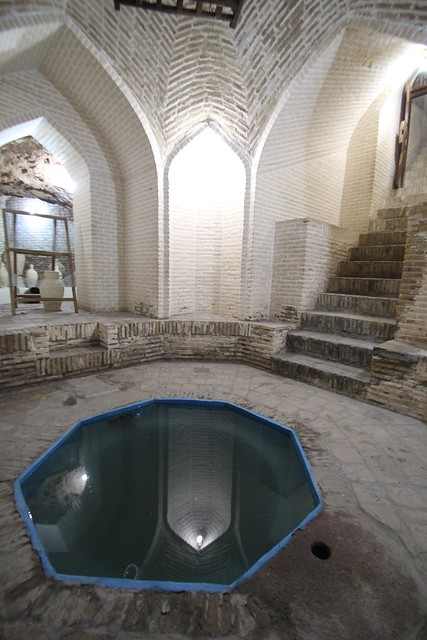
Many go to the Water Museum so they can check out how wealthier Yazd residents lived 100 years ago. The former home is in excellent condition and it’s great to see how the cooling system worked in the home, but there was one big drawback. It gets crowded. I would suggest to skip it but try to find an off-peak time to visit. Possibly when it first opens and large groups are still having breakfasts or late in the day when they are on the bus and rushing on to their next destination.  It’s located just across from the Amir Chaqmagh Complex and Hajj Khalifeh Rahbar Confections Shop.

Yazd: Windcatchers of the Desert Oasis

The top two things that come to mind when I think of my stay in Yazd are Windcatchers and its ancient Qanat water systems. Further confirming that I am a travel geek.

Amir Chaqmagh Complex (edited)
Amir Chaqmagh Complex

Just off of the Ancient Silk Road Highway

It survived Mongol invasion and its famous visitors include explorer Marco Polo in the 13th century and later in the 19th century British writer/traveler Robert Byron.  Byron wondered why others hadn’t noticed its beautiful architecture and asked the question, “Do people travel blind?”  Seems strange that one could visit Yazd without noticing its unique Windcatcher filled cityscape.  But,  it’s something I have asked myself more than once.  Marco Polo probably would have begged to differ since he found Yazd to be “a very fine and splendid city and a centre of commerce” when he traveled through it earlier in the 13th century.

Yazd Water Museum
The water that cools below the windcatcher above.

It’s possible that most were merely distracted by the hustle and bustle of the streets and just safely going about their business.  There are many things to contend with when walking the streets of Yazd.  The locals going to and coming from daily prayer, car and pedestrian traffic, lack of safe crossways, potentially hazardous centuries old water channels, and narrow sidewalks – just to name a few.  I imagine Yazd was just as bustling centuries ago as it is today.   It also as become a stop-off for modern-day explorers who participate in the Mongol Rally in the dead of summer.

Amir Chaqmagh Complex (edited)
Yazd – Amir Chaqmagh Complex

Windcatchers and water

The first thing that stuck me as a visitor in Yazd was the field of windcatchers which rise out of almost every structure in the city.  There are hundreds of them to be seen here. Many are not in use today but are reminders of Yazd’s industrious past.  They along with the qanat helped keep the city’s residents cool during the summer months when temperatures can get above  100 F.

Schoolyard in Yazd
Windcatchers in the Schoolyard in Yazd

Yazd is thought to be the oldest inhabited cities of Iran thanks to the qanat water system made during the Sassanian Period (224-651 AD).  The qanat along with the windcatcher systems keep the lower levels of many buildings and homes cool. This gives residents comfortable rooms to escape to during the steamy summer months and provides a safe place to store food within their home.

Doorway in Yazd
Doorway in the older section of Yazd

These water systems made centuries ago is the main reason this city still remains as it does today.  Water is scarce in this area found in the heart of the persian desert.  The climate is contradicting in the fact it is so dry but it’s full of pomegranate and date trees and fresh water streams still flow from the mountains.  The locals take pride that they and their ancestors have managed to have a water supply without the help machines and modern technology.

Today, Yazd is just as popular stop for travelers on the Silk Road as it was centuries ago. It remains the center of the Zoroastrian faith in Iran even though the numbers have dwindled. They are allowed to continue to worship as they please since Zoroastrians are ironically considered a religious minority even though they are the oldest known organized faith in the world.  The basic three tenets followed by Zoroastrians are: Good Thoughts; Good Words and Good Deeds.  Very good tenets to live by.

Kharanaq: Please don’t shake the Minerat

Ruined city of Kharanaq

Ancient Kharanaq is like a scene out of an old western with tumbleweed and the only signs of life are  some lonely donkeys and feral kitties.  The townspeople have moved into new housing just meters away.

Kharanaq
Kharanaq

The town itself is filled with winding covered passageways with rooms branching off of them. It’s easy to lose your sense of direction while venturing around.  The maze of passages deters thieves since it is difficult to make a quick getaway here.  I imagine that it also helps with keeping spaces inside warm in the winter since there isn’t a direct cross breeze to push warm air out of the interior space.

Ruined city of Kharanaq
Inside the labyrinth of passageways of Kharanaq
Shaking Mineret of Kharanaq
Roof of Kharanaq and it’s shaking minerat

The buildings themselves are basically made of mud and straw and are in a bad state.  Some renovations are going on now but I imagine that there is little funding and the process is slow.  Visitors are allowed to roam freely about the place.   Some visitors have actually fallen through the ceilings since they are naturally unaware of how fragile this place is.   The central minerat used to be open to visitors but it’s been damaged due to visitors carelessness.  This minerat is not flexible and isn’t meant to be shaken.  It’s just as fragile as the rest of the place so resist the temptation while visiting.

Ruined city of Kharanaq
View from the roof of Kharanaq
Ruined city of Kharanaq
Mosque in renovation inside Kharanaq
Ruined city of Kharanaq
Graffiti inside the Mosque – Kharanaq
Ruined city of Kharanaq
View of the hillsides next to Kharanaq

First stop in Yazd: Dolat Abad Windcatcher

It was a friday so things were pretty quiet in Yazd when we arrived.  The fire temple is a popular spot for families to visit on the weekend and it was busy but the stores were closed and only a few doors were open for visitors.  The Dolat Abad Windcatcher complex was one of those open doors.

Dolatabad house
Dolatabad house – Yazd

Yazd is famous for its many windcatchers. The malqaf or tall tower has an opening at the top which faces the prevailing winds. The tower catches the wind where it is cooled by flowing over an underground water source called the Qanat. The combination of the water and cooler walls located in the lower parts of the building cools the air and provides natural air conditioning.  It seems like a pretty green technology right?  I wonder why we don’t see more structures like this in use today.

Dolatabad House Windcatcher
The tallest windcatcher in Iran – 34 meters in height

The tallest wind catcher standing in Iran is the one here in the Dolatabad Garden in Yazd.  It’s 34 meters in height.  The building was the residence of Mohammad Taghi Khan in the Zand era.  The interior contains a pool which is under the windcatcher. The water seems to connect to the long rectangular pool that is outside and in front of the windcatcher.  The outdoor pool is surrounded by fruit trees, flowering plants and of course several traditional cypress trees.

Dolatabad house
Gardens of the Dolat abad House
Dolatabad house
Exterior wall and gardens of the Dolat abad house in Yazd

The building is very attractive and contains beautifully designed ceiling plaster work and colorful glass pained windows. It’s a great site to end the day and begin the days we will have in Yazd and the surrounding area. Time to finally check out our hotel and have a late lunch and tea.

Dolatabad house
Inside the windcatcher at the Dolat abad House – Yazd
Dolat Abad windcatcher area
Ceiling and surrounding plaster work of the windcatcher
Dolatabad house
Beautiful windows of the Dolat abad House – Yazd

First visit to a real Zoroastrian Fire temple in Yazd (Part 2)

The next stop was a short one to see a flame that burns in the honor of the highest deity in the Zoroastrian religion Ahura Mazda – the lord of Light and Wisdom

Fire Temple Atash Behram

The fire found inside this temple in Yazd has been burning continuously since 470 AD.  It came to this simple building in 1932.  The fire is of the highest grade and is referred to as the Atash Behram or Fire of victory.  The flame is composed of fire from 16 different sources which have been collected from various flames.  This massive flame continues to burn behind the glass for us all to see.

Atash Behram
Sneakin’ a peek at the Atash Behram, “Fire of victory in Yazd

When visiting this site it is more for seeing the modern-day impact of Zoroastrian faith in Iran.  There is nothing more here then a simple building with signage only in Persian – this is where Mahmoud – our wonderful guide- came in very handy.  The purpose of our visit was to both pay homage to those who still practice this ancient faith and show support for the community.  Of course, this encouraged me to learn more about something I knew little about before our visit to Iran. Yazd has many of the few surviving followers of the ancient religious practices of Zoroastrianism in a country dominated by Islam.  I wish them well and hope their faith continues to prosper in the days ahead.

First visit to a real Zoroastrian Tower of Silence in Yazd (Part 1)

View from the top of the Towers of Silence in Yazd

It was hard leaving the chill environment of the Zein-o-din but the journey north continued. Our next destination was Yazd known to be the center of Zoroastrianism. We of course had a few Zorastrian highlights to see before the end of the day. These included the ancient burial platform called the Tower of Silence on the southern end of town; the Yezd Atash Behram; and the Dowlat-abad Windtower was our last stop before checking in to our hotel – the Orient Hotel.

Dakhmeh in Yazd
Dakhmeh in Yazd

Tower of Silence or Dakhma – Yazd

The  Sassanid era was were the practice of placing the dead on top of the the Tower of Silence began in 3rd — 7th century BC

The dead body was thought unclean and to bury it or burn it would pollute the earth either way.  The body was instead placed high on top of the tower and left to the elements until all that was left were bleached bones of the departed.    The remaining bleached bones were placed in a center well which contained lime and phosphorus.  The bones then turn to dust.

Platform of the Towers of Silence
Zoroastrian Tower of Silence in Yazd

Today, this practice in Iran has been abandoned due to the shortage of vultures, population growth in the areas close to the towers themselves and falling out of favor with modern Zoroastrian followers.  The burial ceremony is quite elaborate and for more details check out this link.

Zoroastrian Cemetary
Modern Zoroastrian Cematary
Orient Hotel in Yazd
View from the roof of the Orient Hotel in Yazd

A moonlight night at the Zein-o-din

Caravanserai’s were the hostels of the Silk Road hundreds of years ago.

Sunseting over the Zagros Mountains
Sunseting over the Zagros Mountains from the roof of Zein-o-din

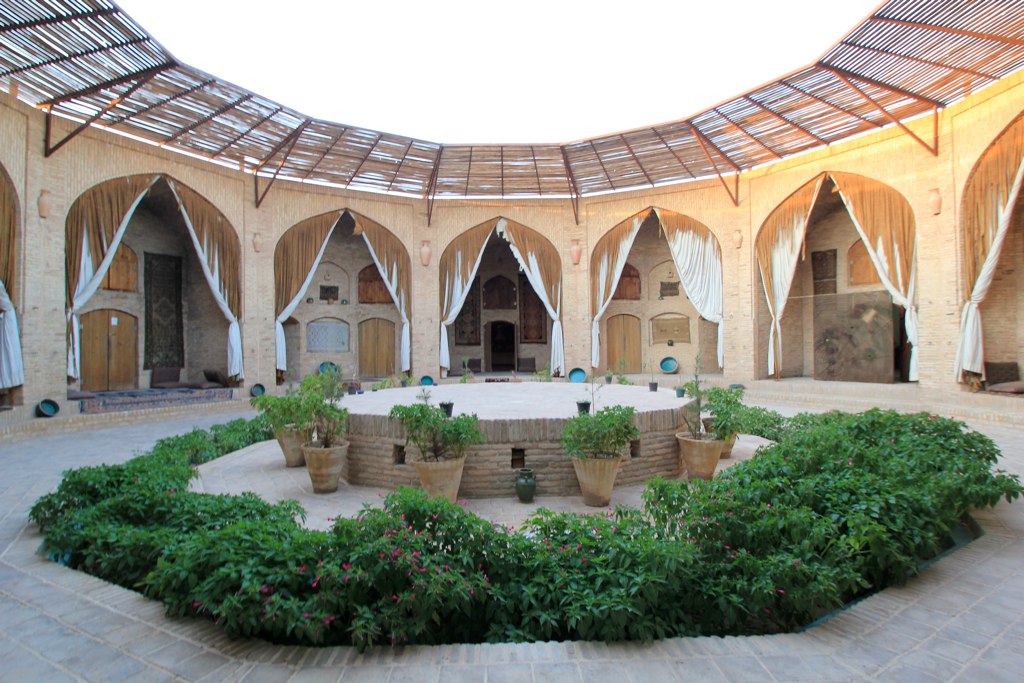
The Zein-o-din Caravanserai is a special place in the middle of the desert in Yazd Province. This one was one of two which is circular since most were square. Some visitors take day trips here and others treat themselves to an overnight stay.  My husband, Mahmoud, his friend and I were surprisingly the only occupants that night.  We were joined for dinner by a group of Spanish women and their guide who were staying in Yazd.  They had only come to enjoy a fabulous meal, watch some traditional Baluchi martial arts performance and talk about where they were going to go shopping the next day.  They didn’t realize my husband speaks spanish.

Inside the Zein-o-din Caravanserai
Dusk at the Zein-o-din

When they took off, it was just us.  The moon was full that night and the stars were the brightest I had seen in weeks.  We don’t get much stargazing opportunities at home in NYC.  We had the run of the place and it was such a beautiful night.  We all ended up sitting on the roof, enjoying the views, tea and a few hits of shisha.  Life was good.

Courtyard of the Zein-o-din Caravanserai
Moonlit courtyard of the Zein-o-din Caravanserai

There were once 999 working caravanserai or khan along the royal road which extended 2500 km from the ancient capital Susa to Sardis.  Shah Abbasi the Great wanted to provide travelers in Persia a safe route of passage and resting places along the way.  Each stop is 30-50 km from the next which allowed them to only have to travel a day between each.  The Shah chose 999 because it was a number that could simply be remembered.  There construction spanned over 10 decades are still found along the highways and desert plans of the Silk Road territories.  Some caravanserai in Iran are still in use in some way or another and many have been neglected.  Some function as storage houses for farmers and other lucky ones are once again resting places for travelers like the Zein-o-din.

IMG_4543
Early morning view of the desert caravanserai next door to Zein-o-din

It took the current owners took 3 years to renovate and they did a fine job.  The rooms are separated by heavy curtains and simply furnished with soft sleeping mattresses on top of wool rugs.  I had the most restful sleep here and the bathrooms were fabulous. I wish I could have spent one more night but the visa clock was ticking.  Still much to see ahead to see and no time to dilly dally.  There’s always next time.

Inside the Zein-o-din Caravanserai
Room inside the Zein-o-din
Inside the Zein-o-din Caravanserai
Great place to have breakfast before heading out

A few stops along the roadway to the Zein-o-din

This was our first day on the road since my husband and I landed in Shiraz just four days prior.  We had visited Persepolis and now we were heading to Cyrus the Great’s burial site and his capital Pasargadae.  After that, we continued on to see the Beehive Ice House structure that was once a common fixture to the landscape in this area.  Very few still remain intact today given that they are pretty fragile.  The last stop of the day is to see the 4000 year old Cypress tree.  It’s located behind the Ice House so if you are in the hood stop by for a look. Try to make a donation to the nice people who are looking after it’s well-being. I say quick stops not because I don’t want to spend more time looking around but the visa time is ticking.

Pasargadae

Tomb of Cyrus the Great
Me at the Tomb of Cyrus the Great

It’s a place not to be missed.  Pasargadae  is an amazing site.  The Iranian Cultural Heritage Organization (ICHO) the UN and a number of individuals recently saved it and Persepolis from being submerged under water. The work on the Sivand Dam has been delayed for the time being.  This has given some skilled archeologists and scientist time to explore the area.  Some amazing things like a cave believed to be occupied 7000 years ago and 9-mile dirt road believed to be the Royal Passage of the Achaemenids – to name a couple – have been discovered.  More clues on what the

The garden of gravel was once a true Persian garden called the Chaharbagh. Modern examples of this four-sided style is seen at the Taj Mahal, the Fin Garden in Kashan and Amir Chakmaq Complex in Yazd – to name a few.  Cyrus’ tomb was once surrounded with streams of running water, tall cypress trees and flowering plants like those seen in those gardens today.  Many other travelers say that it’s not worth the visit but my visit gave me inspiration to learn more about Cyrus the Great. The site itself is more than a pile of cut rock but a place where huge amounts of history took place.  Here’s more information about early excavations of the site.

Dutch Artist sketch of Cyrus’ Tomb in 1672

Abrkouh: Beehive Ice House

Yakh-chal
Yakh-chal or Ice House in Abarkuh

The Beehive-shaped tall abobe Ice Houses for desert climates like those found in Iran around 400 BC. Water collects in the shallow trenches that collect water over time. The ice was later broken up before spring and stored deep inside the interior of the dome. The Ice House is then sealed off until the hot summer months when the ice was needed to make a drink cold, preserve food or make rosewater flavored faloodeh.

.   For further explanation about these structures and others like them in the Middle East, check out this link.

These were used through out the middle east and today are used for storage or living quarters like these smaller Beehive houses in Syria.

Beehive houses
Beehive storage houses in Syria
4,000-year-old Iranian cypress

The 4000 year old Cypress Tree

The cypress tree plays a significant role in Persian culture and influenced the design of famous Persian Gardens in both the past and present.  It’s likeness is carved on the walls of Persepolis, referred to in many Persian poems, woven into carpets and common motif found in decorative tile works inside mosques and homes of Iran.   It stands for many things including longevity, strength, freedom and the state of mourning.

I began noticing the presence of the cypress tree everywhere in my travels.  In the center of miniature paintings, woven in countless rugs in shops and in about every garden visited.  This tree today is in danger of being destroyed by modern man.  The root system of this 33 meter tall tree extends as much as a mile from it’s center – local undertaker mentioned this when we visited.  This means many roots lie underneath some near by farms and newly built roads.

The local Department of Environment of Yazd Province is trying to raise money to buy land near by so that they can ensure the future safety to the oldest living Persian.   It is also listed on the UNESCO world heritage, so please visit have a look if you are near.

4,000-year-old Iranian cypress

Out of Shiraz and into the desert

The stay and Shiraz was a great one but it was time to hit the road and get a change of scenery.  We passed by the Qur’an Gate and headed North out of the city.  It would have been great if we could have driven though it like our guide Mahmoud used to when he and his family would go on a road trip.  There are prayers which followers believe will give them good luck in the journey ahead written in the arches of the passageway. Just passing by it hopefully does the trick.

Qor'an Gate (Dar vazeh Quran)
Qur’an Gate (Dar vazeh Quran)

We had a great driver along with us this time.  He was a friend of Mahmoud, just as friendly and a great driver.  We headed out early so we could pack in a several stops along the way to our night at the Zein-o-din.  This included a stop in Pasargadae, the city of Abrkouh to see the ancient beehive shaped adobe icehouse, the city’s ancient 4000 year old cypress tree, and then finally to one night at the Zein-o-din Caravanserai. This is what I mean about there being too much to do in a limited amount of visa time. It was great to have Mahmoud there to sort out the details.

Caravanserai on the way to Zein-o-din copy
The desert highway from Shiraz to the Zein-o-din Caravanserai